- Introduction to Renewable Energy
- What Is Renewable Energy?
- How Does Renewable Energy Work?
- Why Is Renewable Energy Important?
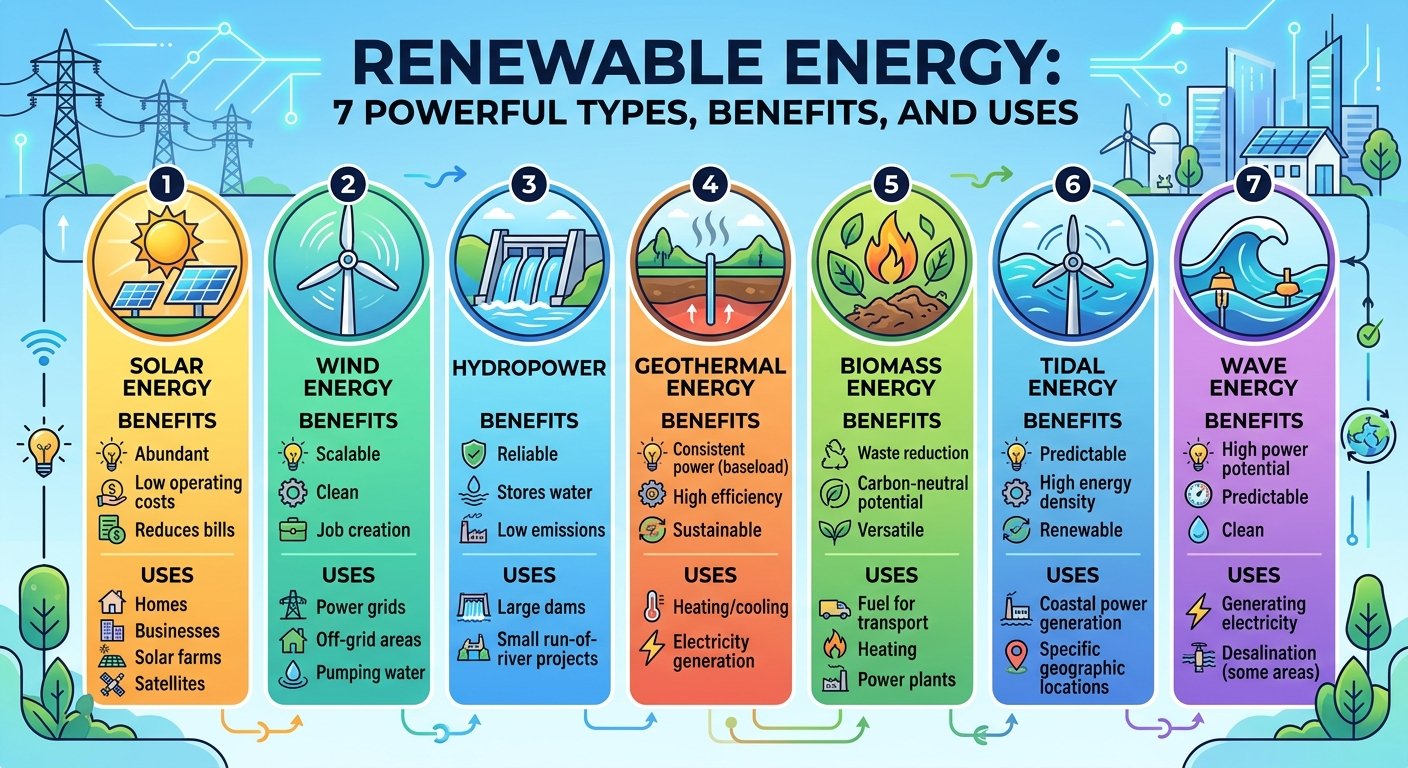
- Seven Main Types of Renewable Energy
- Solar Energy
- Wind Energy
- Hydropower
- Geothermal Energy
- Biomass Energy
- Tidal Energy
- Wave Energy
- Major Benefits of Renewable Energy
- Environmental Benefits of Renewable Energy
- Economic Benefits and Job Opportunities
- Renewable Energy for Homes
- Renewable Energy in Businesses and Industries
- Renewable Energy and Climate Change
- Challenges of Renewable Energy
- Renewable Energy Storage Solutions
- The Role of Technology in Renewable Energy
- Future Trends in Renewable Energy
- Conclusion
- Frequently Asked Questions
Introduction to Renewable Energy
Energy is necessary for modern living. Electricity is used by people to run computers, run factories, transport commodities, run domestic appliances, and deliver services. Fossil fuels including coal, oil, and natural gas have historically provided a large portion of the world’s energy.
Thank you for reading this post, don't forget to subscribe!On the other hand, burning fossil fuels emits pollutants and greenhouse gases. These emissions can have a detrimental impact on human health and air quality in addition to contributing to climate change.
By utilizing natural resources that regenerate throughout time, renewable energy provides an alternative. Energy can be produced by sunlight, wind, moving water, subterranean heat, and organic materials.
What Is Renewable Energy?
Energy generated from naturally occurring sources that are regenerated either constantly or during brief intervals of time is referred to as renewable energy. When properly managed, renewable resources can be used again, in contrast to fossil fuels, which take millions of years to develop.
The primary sources of renewable energy consist of:
Sunlight-derived solar energy.
Wind energy is produced by moving air.
Water flowing or falling can generate hydropower.
Geothermal energy is derived from the Earth’s internal heat.
Biomass energy is derived from organic materials.
Ocean tides provide tidal energy.
The movement of the ocean’s surface produces wave energy.
How Does Renewable Energy Work?
Natural energy is captured by renewable energy systems and transformed into usable heat or electricity. The energy source and the technology in use determine the conversion process.
Several crucial elements are present in a typical renewable power system:
- Energy source: Water, wind, sunlight, or another renewable resource.
- Conversion machinery, such as turbines or solar panels.
- Control systems: Devices that oversee the generation and distribution of energy.
- Storage systems: Batteries or other devices that, when available, store extra energy.
- Electrical connections: Systems that supply power to residences, commercial buildings, or the grid.
Why Is Renewable Energy Important?
Because it may assist in addressing issues related to the environment, the economy, and energy security, renewable energy is significant.
It can lessen reliance on fossil fuels, to start. Some of the electricity produced by coal and natural gas can be replaced by electricity produced by solar panels, wind turbines, and other renewable energy sources.
Second, using renewable energy can reduce greenhouse gas emissions. Most renewable technologies provide power with minimal operating emissions, but manufacturing, construction, transportation, and maintenance all have an impact on the environment.
Third, energy security can be enhanced by renewable energy. By developing their own renewable resources, nations can lessen their reliance on foreign supply disruptions and fuel prices.
Additionally, it opens doors for employment and scientific advancement in fields including energy storage, electrical engineering, solar installation, and wind turbine maintenance.
These factors make renewable energy a crucial component of many nations’ long-term energy plans.
Seven Main Types of Renewable Energy
Solar Energy
Solar energy is created by absorbing sunlight and transforming it into heat or electricity. Because solar panels may be mounted on rooftops, commercial buildings, farms, and big solar power plants, it is one of the most popular renewable energy technologies.
Cells in solar photovoltaic (PV) panels directly transform sunlight into electrical power. Conversely, solar thermal systems harvest heat for many uses, including heating water.
Solar energy is frequently used for:
Producing power for residences and workplaces.
Running agricultural water pumps.
Heating water in homes.
- Powering lamps and outdoor equipment.
Providing electricity to isolated areas.
Wind Energy
Air movement is used in wind energy to create power. Large blades of wind turbines rotate when the wind blows, powering a generator to provide electricity.
It is possible to install wind turbines offshore or on land. While smaller turbines may service particular buildings or distant facilities, larger wind farms provide electricity to power systems.
Among the advantages of wind energy are:
Generation of power from renewable sources.
Minimal emissions while in use.
It is not necessary to burn fuel in order to produce electricity.
- Less reliance on traditional energy sources.
Potential jobs in maintenance and construction.
Hydropower
Hydropower uses flowing water to create electricity. A turbine that is attached to a generator is turned by falling or flowing water in various hydroelectric projects.
Water can be stored in large dams and released when electricity is required. While tiny hydroelectric projects may provide electricity to nearby populations, run-of-river facilities make use of a river’s natural flow.
Among its uses are:
Generating power for cities and businesses.
Providing remote populations with power.
Ensuring the stability of the electrical grid.
Pumped storage devices are used to store energy.
Geothermal Energy
Heat from the Earth’s interior is used in geothermal energy. When subterranean conditions are favorable, this heat can be used directly for construction and industrial operations, or it can be converted into energy.
Typically, geothermal power facilities run turbines using steam or hot water and naturally occurring subterranean heat. Ground-source heat pumps assist in heating and cooling buildings by utilizing the comparatively constant temperature under the surface.
Typical uses consist of:
Producing power.
Heating residential and commercial structures.
Heating some industrial operations.
In favor of greenhouse farming.
Heating water in appropriate areas.
Biomass Energy
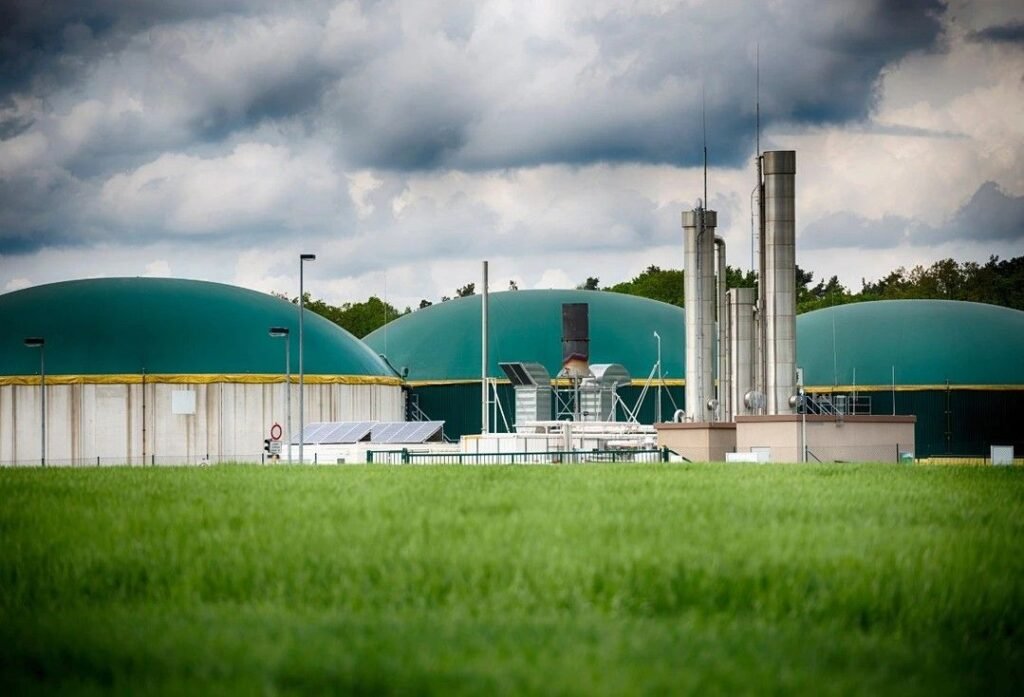
Organic materials, including wood waste, agricultural residues, and some organic wastes, are the source of biomass energy. Biomass can be transformed into heat, electricity, biogas, or liquid biofuels, depending on the material and method.
For instance, in suitable systems, agricultural leftovers can be utilized to provide heat. Anaerobic digesters are another method for turning organic waste into biogas.
Biomass can enhance local energy generation and help recycle some waste items. But it’s not carbon neutral by default. The source of the material, land use, harvesting methods, transportation, and emissions from conversion all affect how it affects the environment.
Tidal Energy
Tidal energy makes advantage of the steady flow of ocean water, which is mostly brought about by the Moon’s and Sun’s gravitational pull.
While some tidal energy systems rely on variations in water levels between high and low tides, others use underwater turbines to catch moving water.
Tidal power can be more dependable than certain weather-dependent renewable energy sources since tides have predictable cycles.
Future marine energy projects and the production of electricity for coastal areas are examples of potential uses.
However, there are a number of issues with tidal technology, including expensive installation, corroding equipment, challenging underwater maintenance, and potential impacts on marine environments. There are also few suitable areas.
Wave Energy
The motion of waves on the ocean’s surface is transformed into usable energy via wave energy. To capture wave motion and produce power, several methods employ mechanical parts, floating devices, or pressure changes.
In coastal areas with robust and reliable wave resources, wave energy has promise. It might help supply some offshore facilities and coastal towns with electricity.
Among its potential advantages are:
Utilizing a resource that is naturally renewed.
Diversifying the sources of renewable energy.
Research in maritime engineering is supported.
Providing potential for energy developments along the coast.
Major Benefits of Renewable Energy
The most important benefits include:
- Reduced dependence on fossil fuels: Renewable electricity can reduce the amount of coal, oil, and natural gas needed for energy production.
- Lower operational emissions: Solar and wind power generate electricity without directly burning fuel, helping reduce operational greenhouse gas emissions.
- Improved energy security: Countries can use locally available sunlight, wind, water, and other resources to diversify their energy supplies.
- Potential long-term savings: Solar installations and other renewable systems may reduce energy bills, depending on installation costs, financing, maintenance, and electricity prices.
- New employment opportunities: Renewable energy projects create work in engineering, manufacturing, installation, research, and maintenance.
- Better access to electricity: Suitable off-grid systems can provide power to communities where extending conventional electricity networks is difficult or expensive.
- Environmental Benefits of Renewable Energy
Other advantages for the environment could be:
When polluting energy sources are replaced, the quality of the air improves.
Reduced emissions of greenhouse gases over the life cycle of a system.
Reducing the amount of fuel used to generate power.
Opportunities to integrate effective land and water management with renewable energy.
However, careful planning is necessary for renewable energy initiatives. While raw resources are needed to manufacture panels, turbines, and batteries, land or suitable locations are needed for solar farms and wind projects.
Effective end-of-life management, recycling, wildlife protection, site selection, and responsible production all contribute to the best environmental results.
Economic Benefits and Job Opportunities
By generating new sectors and lowering sensitivity to certain fuel price swings, renewable energy can promote economic growth.
To install panels and maintain electrical systems, solar enterprises require specialists. Engineers, equipment operators, and maintenance specialists are needed for wind farms. Projects involving energy storage open up new avenues for software development, electrical engineering, and battery technologies.
Businesses may gain from renewable energy by managing their energy expenses. By installing an appropriate solar system, a plant can lower the quantity of electricity it buys from the grid during the day.

Renewable Energy for Homes
Renewable energy can help homeowners become less dependent on traditional electricity and, in certain situations, cut household energy costs.
When rooftops receive enough sunlight and installation is permitted by local laws, rooftop solar panels are a popular choice. The amount of fuel or electricity needed to heat water can be decreased with a solar water heater.
Additionally, some homes store extra solar energy in batteries for later use. A well-designed solar system can supply electricity in rural locations with limited grid connectivity.
Homeowners should think about the following before installing renewable energy equipment:
The amount of power used by households.
The state of the roof and the amount of sunshine.
The quality and warranty of the equipment.
The expense of installation and upkeep.
Battery and backup requirements.
Grid-connection regulations and local electricity rates.
It is also important to think about energy efficiency. A modest renewable energy system may be able to meet residential needs if inefficient lights and appliances are replaced.
Renewable Energy in Businesses and Industries
Energy is used by businesses and industrial buildings for data processing, manufacturing, transportation, heating, cooling, and lighting. Some of these needs can be satisfied by renewable energy.
Rooftop solar panels can be installed by commercial buildings, and larger solar systems can be purchased by industries in strategic places. Through available utility programs or power agreements, several businesses buy renewable electricity.
While food processing firms may look into biomass or other renewable heat sources when it is both environmentally and technically feasible, agricultural businesses can employ solar-powered pumps when appropriate.
Combining renewable energy with energy-efficient machinery, smart meters, and energy management systems can help businesses achieve better outcomes.
Organizations should evaluate their electricity demand, available space, operating schedules, financing, and expected return prior to making an investment. A well-designed system can help guaranty that the technology meets the real needs of the company.
Renewable Energy and Climate Change
Greenhouse gas emissions from human activity, such as burning fossil fuels for transportation, heating, and power, are directly linked to climate change.
By substituting some of the use of fossil fuels with lower-emission alternatives, renewable energy can help address this issue. For instance, solar and wind power produce energy without directly emitting carbon dioxide during fuel combustion.
The replacement energy source and the emissions from building, manufacturing, maintenance, and disposal determine the overall climate benefit.
The ideal way to use renewable energy is as a component of a larger climate strategy that also incorporates improved industrial processes, energy efficiency, greener transportation, and responsible land use.
Challenges of Renewable Energy
Despite the obvious benefits of renewable energy, a number of issues need to be resolved before it can be widely used.
High Starting Expenses
Batteries, wind turbines, solar panels, and other equipment might cost a lot of money up front. Projects can be made more accessible through financing programs and reduced equipment costs.
Dependency on the Weather
Both wind and solar energy rely on the environment. While wind turbines require favorable wind conditions, solar panels produce less electricity at nite and during times of severe cloud cover.
Energy Storage
It may be necessary to store or reroute extra energy when the output of renewable electricity surpasses the demand. Supply and demand can be balanced with the aid of flexible technology such as batteries and pumped-storage hydropower.
Infrastructure for Grid
In order to link new renewable energy projects and provide electricity where it is required, electricity networks may need to be upgraded. Grid flexibility and extension are crucial criteria for supporting expanding renewable energy, according to the IEA.
Land and Environmental Impacts
Large energy projects may require land, materials, roads, or transmission lines. Careful planning is necessary to protect wildlife, ecosystems, and nearby communities.
Skills and Maintenance
Professionals with the necessary training are needed to install, inspect, repair, and operate renewable energy systems safely. Skills shortages can be addressed through workforce development and technical education.
Investment, careful planning, technological innovation, and collaboration between communities, corporations, and governments are all necessary to overcome these obstacles.
Renewable Energy Storage Solutions
Because the time when people require electricity does not always coincide with the production of renewable electricity, energy storage is crucial.
In the middle of the day, for instance, solar panels might provide more electricity than a household uses. Some of this energy can be stored for use at nite.
Typical storage options consist of:
Lithium-ion batteries are used to store electricity for grid applications, businesses, homes, and cars.
Pumped-storage hydropower produces energy while water flows downhill and uses excess electricity to pump water uphill.
Thermal energy storage is used in buildings and industrial systems to store heat or cold for later use.
When created with low-emission electricity, hydrogen can store energy, but conversion and storage losses can be significant.
Other battery technologies: Depending on cost, duration, safety, and material availability, different chemistries may be appropriate for specific applications.
The Role of Technology in Renewable Energy
Renewable energy systems are becoming more effective, controllable, and flexible thanks to technological advancements.
Compared to prior designs, modern solar panels are more efficient at converting sunlight into power. The invention of wind turbines has made it easier to harness energy from favorable wind conditions.
Digital monitoring systems can assist operators in planning maintenance, tracking electricity production, and spotting equipment issues. Artificial intelligence can help with energy forecasts and enhance supply and demand coordination.
Smart grids help regulate electricity flows by using sensors, digital communication, and automated controls. They can facilitate the integration of variable renewable sources when paired with energy storage and flexible demand.
Future Trends in Renewable Energy
The future of renewable energy will likely involve improvements in solar power, wind energy, storage systems, smart grids, and industrial electrification.
Important trends to watch include:
Advanced battery storage: Costs could be lowered, and electricity systems with higher percentages of solar and wind power could be supported by new battery designs and better manufacturing.
Offshore wind development: Although costs and building difficulties are still major obstacles, certain nations are growing offshore wind projects in order to access stronger and more reliable winds.
Improved grid connections and digital controls can assist in managing peak demand, balancing renewable supplies, and cutting down on wasteful electricity.
Green hydrogen for specific industries: In some industrial processes and applications that are challenging to electrify directly, hydrogen generated with low-emission power may assist lower emissions.
Better recycling: As renewable energy installations expand, recycling solar panels, batteries, and wind turbine parts could aid in material recovery and waste reduction.
More dispersed energy systems: To manage their electrical needs, homes, companies, and farms are increasingly combining solar panels, batteries, and sophisticated controls.
Conclusion
An essential component of the shift to greener, more sustainable energy systems is renewable energy. There are several ways to generate heat or electricity from renewable resources, including solar energy, wind power, hydropower, geothermal energy, biomass, tidal energy, and wave energy.
These innovations can promote energy security, lessen reliance on fossil fuels, reduce operating emissions, and generate jobs. But there are issues that need to be resolved, including upfront costs, weather-dependent production, energy storage, and grid infrastructure.
Frequently Asked Questions
- What is renewable energy?
Renewable energy is energy produced from naturally replenished resources such as sunlight, wind, flowing water, geothermal heat, and certain organic materials.
- What are the seven main types of renewable energy?
The seven types covered in this article are solar energy, wind energy, hydropower, geothermal energy, biomass energy, tidal energy, and wave energy.
- What are the main benefits of renewable energy?
Its main benefits include reduced reliance on fossil fuels, lower operational emissions, improved energy security, potential long-term cost savings, and new employment opportunities.
- Is renewable energy suitable for homes?
Yes. Depending on location and budget, households may use rooftop solar panels, solar water heaters, batteries, and other energy-efficient technologies.
- What is the future of renewable energy?
It is anticipated that advancements in solar panels, wind turbines, batteries, smart grids, and other low-emission technologies will lead to an increase in renewable energy. Government policy, infrastructure, and investment will all affect growth.