Academic Article | Computer Studies | Nursing and Health Sciences
Thank you for reading this post, don't forget to subscribe!Introduction
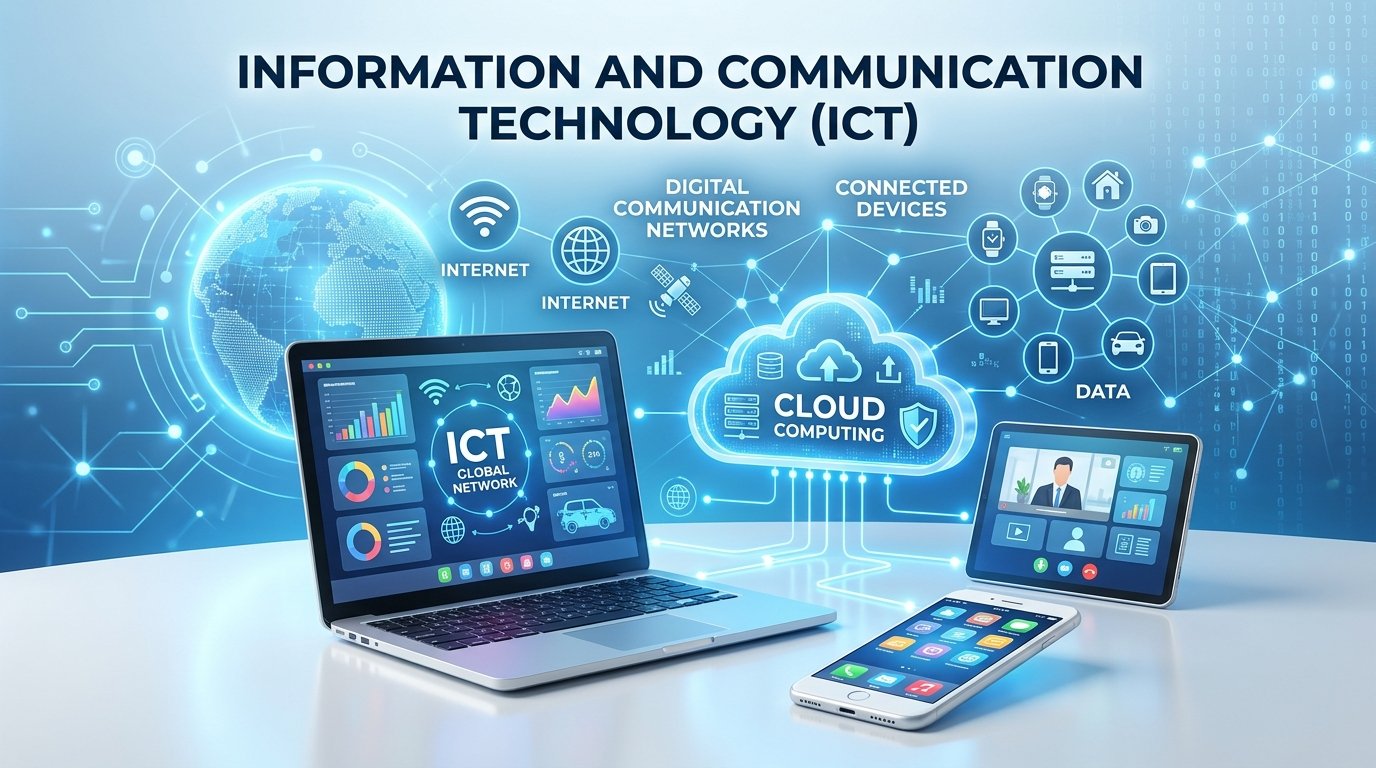
Information and Communication Technology (ICT) has become an essential part of modern life. It plays an important role in education, healthcare, communication, business, research, and other fields. Today, computers, smartphones, the internet, and digital applications help people access information, communicate with others, and perform daily activities more efficiently.
ICT has changed the way students learn, teachers teach, doctors diagnose diseases, and healthcare professionals manage patient information. However, the use of technology also creates ethical and legal responsibilities, particularly regarding privacy, security, copyright, and the responsible use of digital platforms.
This article explains what ICT is, its major components, its role in education and health and well-being, and the ethical and legal considerations associated with its use.
1. Definition of Information and Communication Technology (ICT)
Information and Communication Technology (ICT) refers to digital technologies, computer systems, communication networks, and software used to collect, process, store, retrieve, and share information.
In simple words, Information and Communication Technology (ICT) is the use of computers, mobile phones, the internet, and other electronic devices to manage information and communicate with people.
ICT allows individuals and organizations to exchange information quickly, access educational resources, maintain digital records, and communicate across geographical boundaries.
Examples of ICT include:
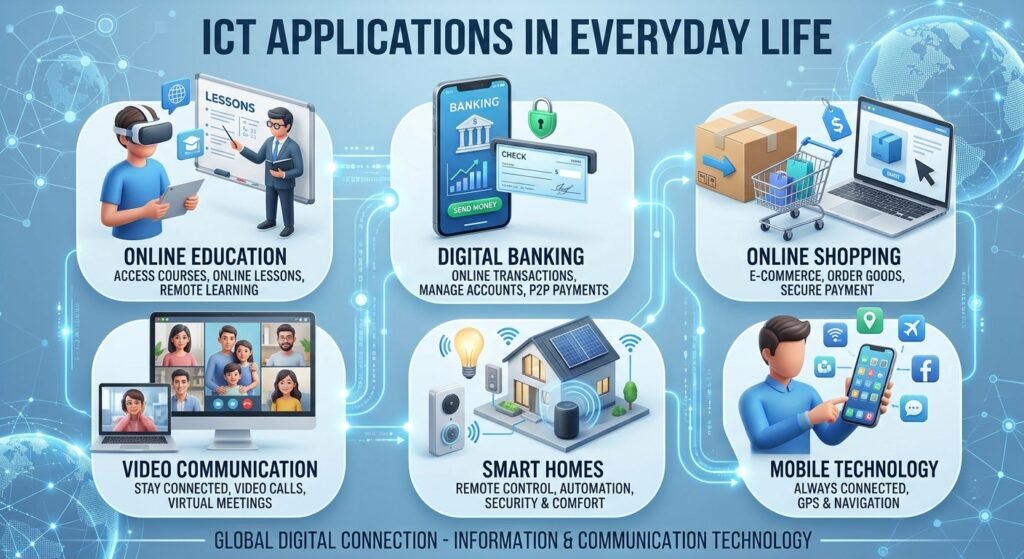
- Computers and laptops.
- Smartphones and tablets.
- Internet and Wi-Fi networks.
- Email and messaging applications.
- Video conferencing platforms.
- Digital libraries and online learning systems.
- Electronic health records (EHRs).
2. Components of Information and Communication Technology (ICT)
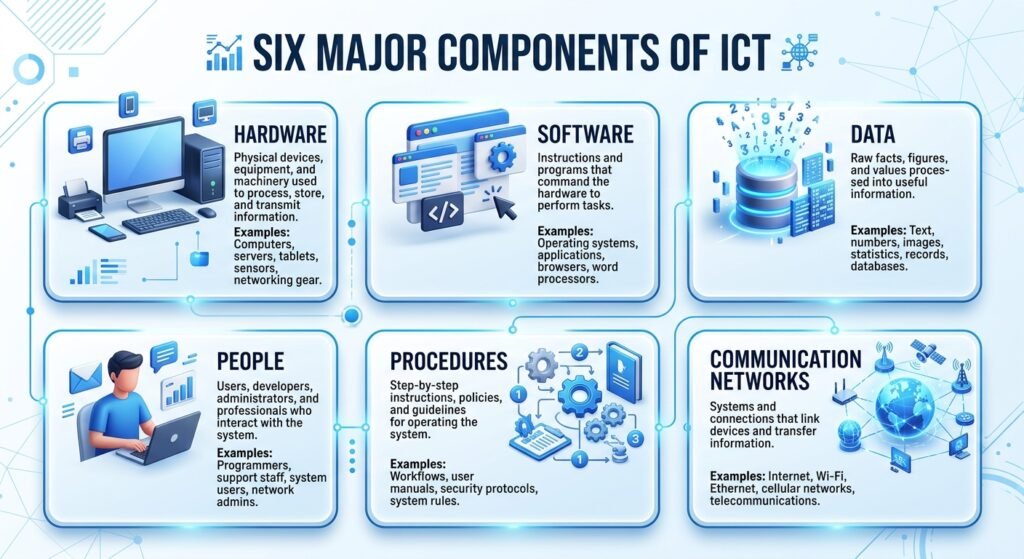
Information and Communication Technology (ICT) can be understood through the following major components:
2.1 Hardware
Hardware refers to the physical parts of a computer or digital device that can be seen and touched.
Examples include:
- Desktop computers and laptops.
- Keyboards and mouse devices.
- Monitors and printers.
- Smartphones and tablets.
- Hard drives and USB storage devices.
- Routers and networking equipment.
2.2 Software
Software refers to the programs and instructions that tell computer hardware what to do. It helps users perform different tasks.
There are two main types:
- System software: Controls computer operations and manages hardware resources. Examples include Windows, Linux, Android, and macOS.
- Application software: Helps users perform specific tasks. Examples include Microsoft Word, Excel, PowerPoint, web browsers, and educational applications.
2.3 Data and Information
Data refers to raw facts and figures entered into a computer. When data is processed and organized into a meaningful form, it becomes information.
For example, a patient’s blood pressure readings, temperature, and pulse rate are data. When these readings are recorded and interpreted, they provide useful clinical information.
2.4 People
People are an important component of ICT because they operate, manage, develop, and use technology.
Examples include:
- Computer users.
- Teachers and students.
- Doctors and nurses.
- Software developers.
- Network administrators.
- IT professionals.
2.5 Procedures
Procedures are the rules, instructions, and guidelines that explain how to use computer systems and information safely and correctly.
Examples include:
- Instructions for operating computer systems.
- Guidelines for entering patient information.
- Data backup procedures.
- Password and security policies.
- Rules for using educational platforms.
2.6 Communication Networks and the Internet
Communication networks connect computers and other digital devices so that information can be shared between users.
Examples include:
- Internet and Wi-Fi.
- Local Area Networks (LAN).
- Wide Area Networks (WAN).
- Mobile networks (3G, 4G, and 5G).
- Cloud computing and online communication systems.
These components work together to make ICT useful in education, healthcare, business, and everyday life.
3. Role of ICT in Education

Information and Communication Technology (ICT) has transformed the traditional education system by providing modern methods of teaching, learning, communication, and research. Students and teachers can access educational resources from anywhere through digital technology.
The major roles of ICT in education include:
3.1 Online Learning
ICT allows students to attend classes through online platforms without being physically present in educational institutions.
Examples include Zoom, Google Meet, Microsoft Teams, and online learning management systems.
3.2 Access to Educational Information
Students can access digital libraries, electronic books, research articles, educational websites, and online lectures. This makes learning easier and provides opportunities for independent study.
3.3 Improved Teaching Methods
Teachers can use multimedia presentations, videos, animations, projectors, and interactive applications to explain difficult topics.
For example, nursing teachers can use videos and digital presentations to demonstrate clinical procedures and patient-care techniques.
3.4 Communication Between Teachers and Students
Information and Communication Technology (ICT) makes communication easier through emails, messaging applications, online discussion forums, and educational portals.
Students can ask questions, submit assignments, receive feedback, and discuss academic topics.
3.5 Research and Knowledge Development
Students and researchers use search engines, online journals, and digital databases to collect information and conduct academic research.
3.6 Digital Assessment and Examination
Educational institutions use online quizzes, computerized examinations, and digital assignment systems to evaluate students’ academic performance.
3.7 Distance Education
ICT provides educational opportunities to students living in remote areas or those who cannot attend regular classes because of work or personal responsibilities.
Benefits of ICT in education:
- Makes education more accessible.
- Improves teaching and learning quality.
- Saves time and resources.
- Encourages independent learning.
- Improves communication and collaboration.
- Provides access to updated educational materials.
4. Role of ICT in Health and Well-Being
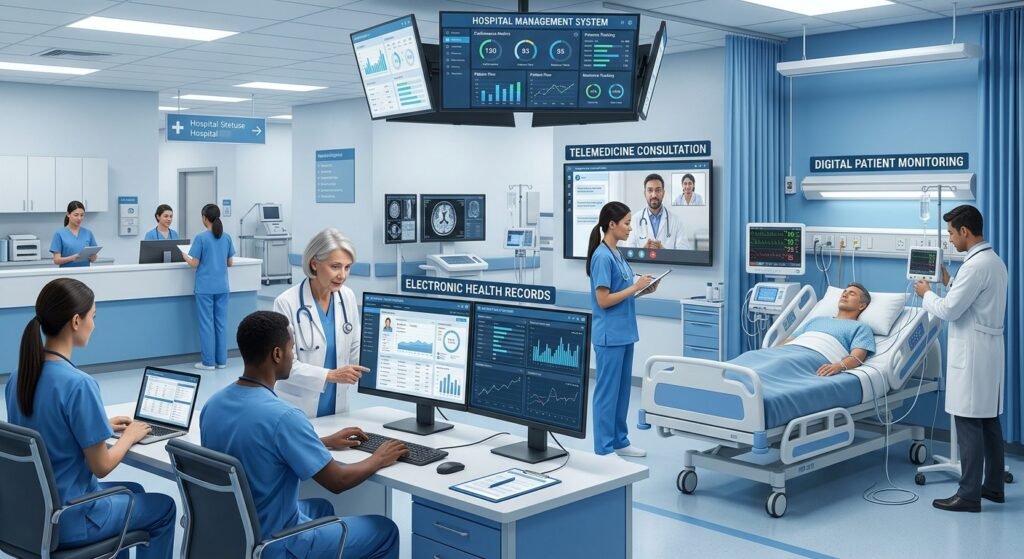
Information and Communication Technology (ICT) plays a significant role in improving healthcare services, patient safety, medical research, and public health. Modern healthcare institutions use computer systems and digital communication technologies to manage patient records, support diagnosis, and improve treatment.
4.1 Electronic Health Records (EHRs)
Electronic Health Records are digital records containing patients’ medical histories, diagnoses, medications, laboratory reports, allergies, and treatment details.
They help doctors and nurses access important patient information quickly and improve continuity of care.
4.2 Telemedicine and Telehealth
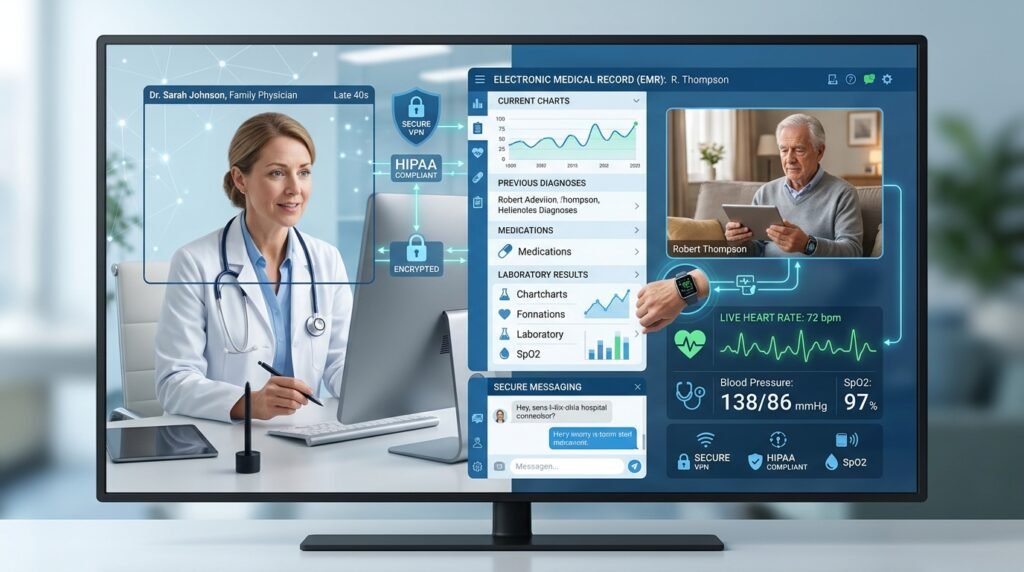
Telemedicine allows patients to consult doctors through video calls, mobile applications, and online platforms.
It is particularly helpful for people living in rural and remote areas who have limited access to hospitals and specialists.
4.3 Medical Diagnosis and Treatment
Healthcare professionals use computerized diagnostic equipment and medical software to identify diseases and plan appropriate treatment.
Examples include:
- Digital X-ray systems.
- CT scans and MRI machines.
- Ultrasound equipment.
- Computerized laboratory systems.
- Electronic patient monitoring systems.
4.4 Health Information and Awareness
The internet provides information about diseases, prevention, nutrition, exercise, vaccination, and healthy lifestyles.
Health departments and hospitals use websites and social media platforms to spread awareness about public health issues.
4.5 Patient Monitoring
ICT-based devices help healthcare professionals monitor patients’ vital signs, including:
- Blood pressure.
- Heart rate.
- Oxygen saturation.
- Body temperature.
- Blood glucose levels.
Wearable devices and remote monitoring systems can also help individuals track their physical activity, sleep, and general health.
4.6 Hospital Management
Hospitals use Information and Communication Technology (ICT) systems to manage appointments, patient registration, laboratory reports, pharmacy records, billing, and medical inventories.
These systems reduce paperwork, improve administrative efficiency, and support better healthcare delivery.
4.7 Medical Education and Research
Doctors, nurses, and other healthcare professionals use online courses, medical journals, webinars, and digital libraries to improve their knowledge and professional skills.
ICT also supports medical research by helping researchers collect, store, analyze, and share health-related data.
4.8 Mental Health and Well-Being
Digital platforms provide access to mental health education, online counselling, psychological support, and wellness applications.
They can help individuals manage stress, improve awareness, and seek professional support.
Benefits of ICT in healthcare:
- Improves patient care and safety.
- Provides quick access to medical information.
- Supports accurate record-keeping.
- Improves communication between healthcare professionals.
- Saves time and reduces paperwork.
- Supports remote healthcare services.
- Promotes health awareness and disease prevention.
5. Ethical and Legal Considerations in the Use of ICT Platforms and Tools
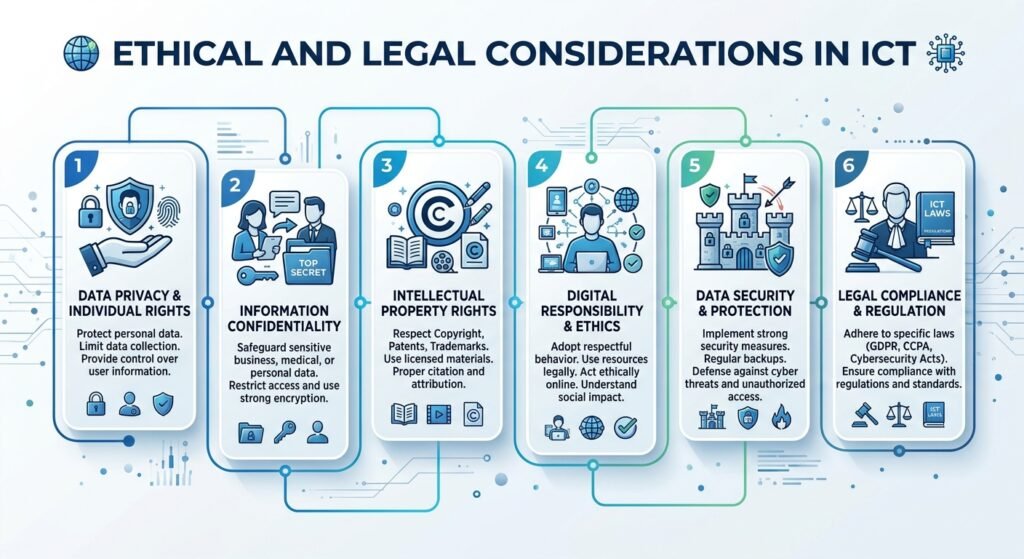
Ethical and legal considerations are important when using computers, the internet, social media, and other digital platforms.
Ethics refers to moral principles that guide individuals to use technology responsibly and respectfully.
Legal considerations refer to laws and regulations that control the use of technology and protect individuals, organizations, and digital information.
Users must understand their responsibilities to prevent misuse, protect privacy, and maintain digital security.
5.1 Privacy and Confidentiality
Privacy means protecting personal information from unauthorized access or disclosure.
Users should not share another person’s private information without permission.
In healthcare, nurses and doctors must maintain the confidentiality of patients’ medical records, diagnoses, photographs, and personal details.
5.2 Data Protection and Security
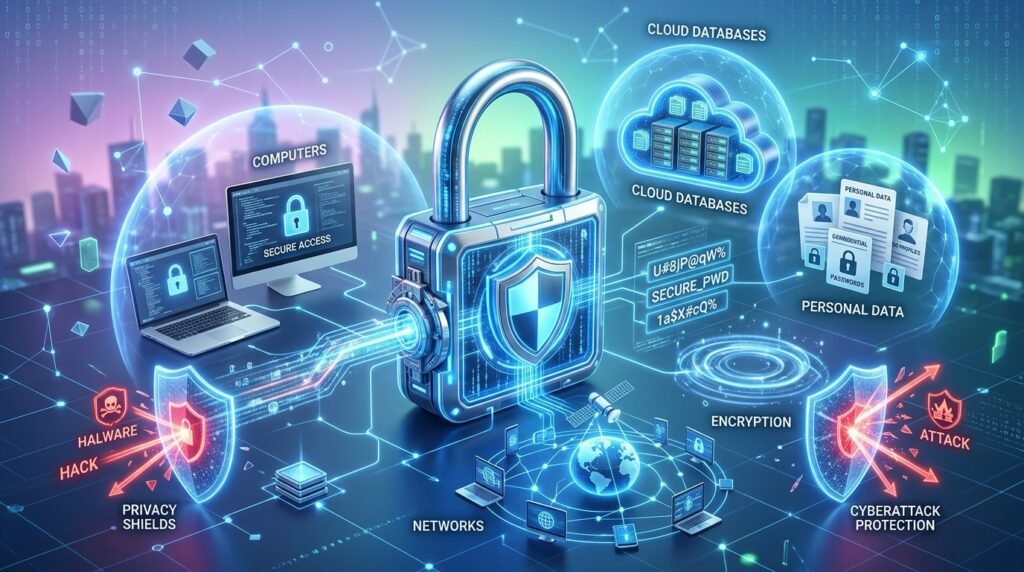
Personal and organizational data must be protected against unauthorized access, theft, alteration, and loss.
Important security practices include:
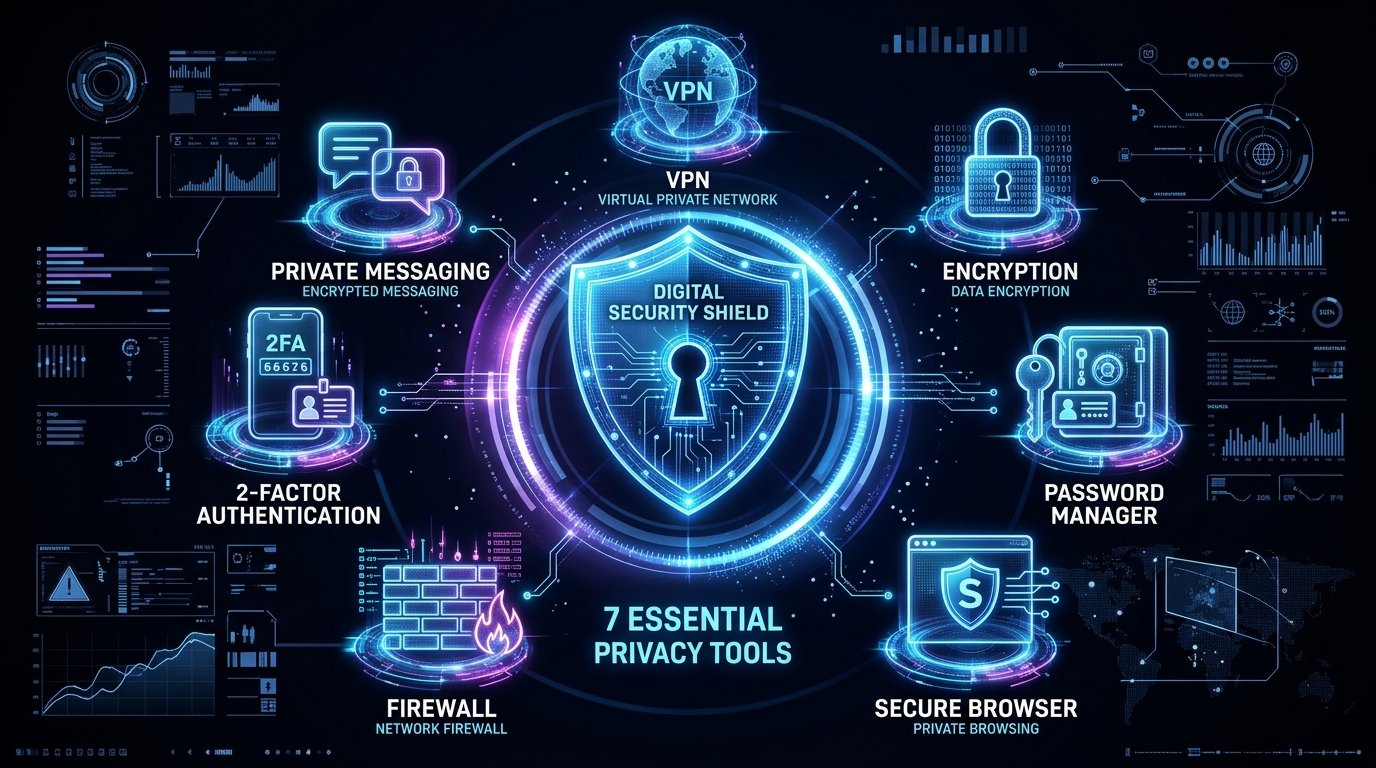
- Using strong passwords.
- Enabling two-factor authentication.
- Installing updated antivirus software.
- Avoiding suspicious links and attachments.
- Keeping important data backed up.
- Using secure internet connections.
5.3 Copyright and Intellectual Property
Copyright protects the original work of authors, researchers, artists, and software developers.
Users should not copy or distribute books, articles, images, videos, or software without proper permission or legal authorization.
Students should give proper references and citations when using information from other sources.
5.4 Plagiarism
Plagiarism means presenting another person’s work, ideas, or writing as one’s own without giving proper credit.
Students must prepare assignments honestly, acknowledge their sources, and avoid copying content directly from websites or other students.
5.5 Responsible Use of Social Media
Social media platforms should be used responsibly and respectfully.
Users should:
- Avoid spreading false information.
- Respect other people’s opinions.
- Avoid cyberbullying and harassment.
- Not share private photographs without permission.
- Verify information before forwarding it.
- Avoid posting offensive or harmful content.
5.6 Cybercrime and Hacking
Cybercrime refers to illegal activities performed using computers, networks, or the internet.
Examples include:
- Hacking and unauthorized access.
- Identity theft.
- Online fraud and financial scams.
- Phishing attacks.
- Spreading viruses and malware.
- Stealing confidential information.
Users should follow cybersecurity guidelines and report suspicious activities.
5.7 Accuracy and Reliability of Information
Not all information available on the internet is correct or reliable. Users should check the credibility of websites, authors, research publications, and official sources before accepting or sharing information.
This is especially important in healthcare because incorrect medical information may put patients’ lives at risk.
5.8 Professional Ethics in Healthcare ICT
Healthcare professionals have special ethical responsibilities when using Information and Communication Technology (ICT) tools.
They should:
- Maintain patient confidentiality.
- Access patient records only for authorized professional purposes.
- Never share patient photographs or reports without appropriate consent.
- Record accurate patient information.
- Avoid discussing patients on public social media platforms.
- Use hospital information systems according to institutional policies.
- Protect login credentials and avoid sharing passwords.
5.9 Legal Responsibilities in Pakistan
In Pakistan, the Prevention of Electronic Crimes Act (PECA), 2016, as amended, provides a legal framework addressing various electronic crimes.
It covers matters such as unauthorized access to information systems, interference with data, identity-related offences, and certain forms of online harassment and fraud.
The Constitution of Pakistan also recognizes the protection of dignity and privacy, particularly under Article 14.
Therefore, individuals and organizations must use Information and Communication Technology (ICT) platforms according to applicable laws and regulations.
6. Challenges and Limitations of ICT
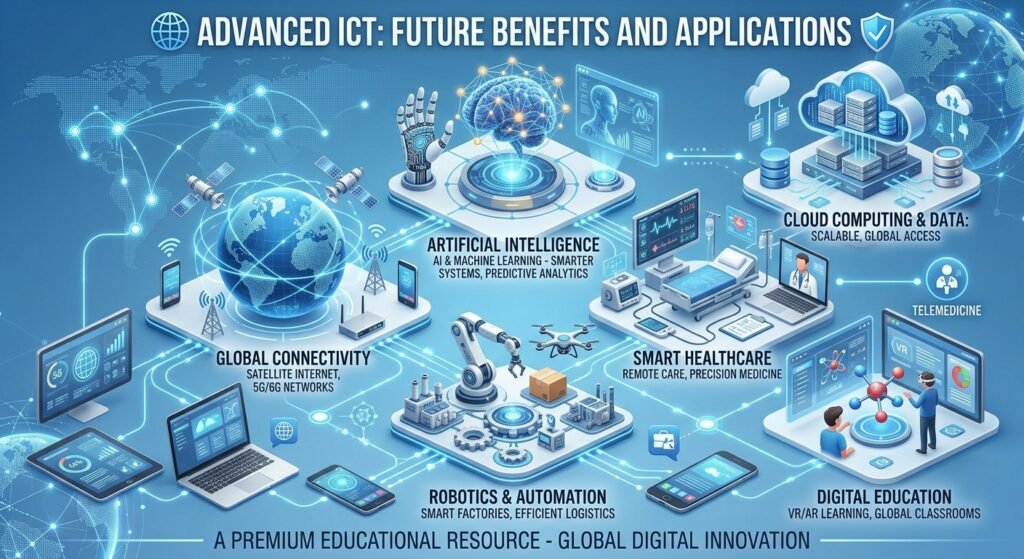
Although Information and Communication Technology (ICT) provides many advantages, it also has some challenges.
- Digital Divide: Not everyone has access to computers, smartphones, or reliable internet connections.
- Cybersecurity Risks: Personal and organizational information may be exposed to cyberattacks.
- Privacy Issues: Personal information can be misused or shared without permission.
- Internet Addiction: Excessive use of digital devices can affect sleep, physical activity, and social relationships.
- Technical Problems: System failures, internet interruptions, and software errors can disturb daily activities.
- Misinformation: False or misleading information can spread quickly through social media.
- Cost of Technology: Purchasing and maintaining modern digital equipment can be expensive.
These challenges can be reduced through digital literacy, cybersecurity awareness, responsible technology use, and proper training.
7. Conclusion
Information and Communication Technology (ICT) is an important part of modern society. It combines hardware, software, data, people, procedures, and communication networks to manage and exchange information.
ICT has improved education by providing online learning, digital libraries, and modern teaching methods. Similarly, it has improved healthcare through electronic health records, telemedicine, digital diagnostic systems, and patient monitoring.
However, technology must be used responsibly. Protecting privacy, maintaining confidentiality, respecting copyright, avoiding plagiarism, and following cyber laws are essential responsibilities of every ICT user.
In conclusion, ICT is a powerful tool for improving education, healthcare, communication, and overall quality of life when it is used ethically, legally, and effectively.
8. References and Recommended Books
The following books and resources provide the academic foundation for this article:
- Morley, D., & Parker, C. S. (2016). Understanding Computers: Today and Tomorrow, Comprehensive (16th ed.). Cengage Learning.
- Morley, D., & Parker, C. S. Computing Essentials. Cengage Learning.
- Vermaat, M. E., Shaffer, S. L., & Freund, S. M. Discovering Computers. Cengage Learning.
- O’Leary, T. J., & O’Leary, L. I. Computing Essentials. McGraw-Hill Education.
- Government of Pakistan. Prevention of Electronic Crimes Act, 2016, as amended.
- Constitution of the Islamic Republic of Pakistan, Article 14.
Important points for examination preparation
| Question | Key answer |
|---|---|
| What is ICT? | Technology used to collect, process, store, and communicate information. |
| Main components of ICT? | Hardware, software, data, people, procedures, and networks/internet. |
| ICT in education? | Online learning, digital libraries, research, and communication. |
| ICT in healthcare? | EHRs, telemedicine, diagnosis, monitoring, and hospital management. |
| What is ICT ethics? | Moral principles for responsible technology use. |
| What are legal considerations? | Following cyber laws, copyright, privacy, and data protection requirements. |