- What is privacy technology?
Why data privacy matters - Seven types of privacy technology
Encryption technology
Privacy-focused browsers and search engines
Password managers and multi-factor authentication
Virtual private networks (vpns)
Data anonymization and masking
Privacy management software
Secure messaging and file sharing - Benefits of privacy technology
- Challenges and limitations
- Best practices for protecting personal data
- Future trends in privacy technology
Conclusion
Frequently asked questions
- What Is Privacy Technology?
Privacy Technology are tools, software, systems, and methods intended to safeguard personal data and provide individuals with more control over their data are referred to as privacy technology. It aids in minimizing pointless data collecting, restricting illegal access, safeguarding private communications, and controlling the sharing and storage of sensitive data. Encryption software, privacy-conscious web browsers, password managers, encrypted messaging apps, and technologies that eliminate personally identifiable information from datasets are a few examples. Individuals, small and large businesses, government agencies, educational institutions, and healthcare organizations can all benefit from these technologies. Protecting personal information is become more than just a technical issue as digital services proliferate; it is crucial to upholding confidence and employing technology sensibly.
Thank you for reading this post, don't forget to subscribe!Depending on the issue it attempts to solve, privacy technology functions in a variety of ways. Readable data is converted by encryption into a format that is often unintelligible without the right key. While password managers assist users in creating and storing distinct passwords for several accounts, privacy-conscious browsers can limit specific trackers. Companies might employ privacy management software to monitor the collection and handling of personal data, or data masking to conceal sensitive information in testing environments. Strong cryptography and suitable protection for data during transmission and storage are advised by the Open Worldwide Application Security Project (OWASP).

Why Data Privacy Matters
Data Privacy Technology is important because digital information can reveal a lot about an individual. Names, email addresses, phone numbers, financial records, location histories, browsing activity, photos, and account details can expose people to identity theft, fraud, unwanted tracking, or misuse of personal information. When businesses gather more information than they need or do not adequately protect it, it can have negative effects on clients, staff, and the business itself. An unprotected client database, for instance, can provide account details and contact information that thieves could use in phishing scams. Additionally, private conversations, documents, and links to change passwords for other services may be accessible through a stolen email account.
- Seven Types of Privacy Technology
Numerous solutions are included in privacy technology, and each one focuses on a certain aspect of data protection. While some systems lessen tracking, secure accounts, or assist enterprises in managing sensitive documents, others safeguard data as it travels over a network. Knowing the distinctions makes it simpler to select appropriate instruments rather than presuming that a single program can safeguard everything. A Privacy Technology-focused browser, for instance, might lessen certain online tracking, but it doesn’t instantly encrypt all computer files. In a similar vein, while a VPN can shield specific network activity, it cannot prevent phishing scams or secure compromised devices. The seven categories listed below provide a useful foundation for comprehending the state of privacy technologies.
Encryption Technology
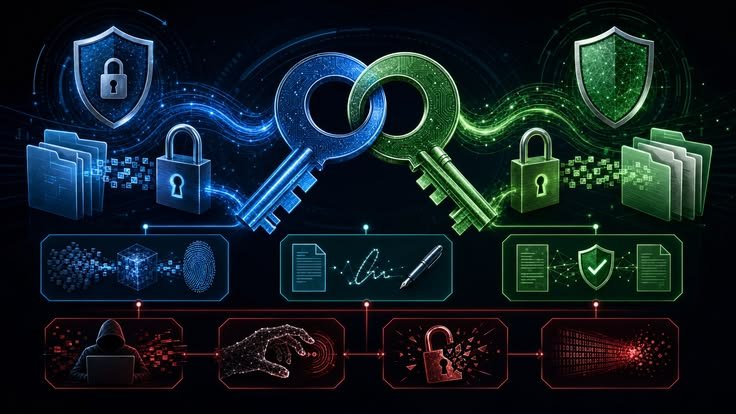
Information is protected by encryption technology, which converts readable data into ciphertext that can only be decrypted with the right cryptographic key. It can safeguard data sent via secure internet connections, backups, computer files, and messages sent between devices. For instance, if the laptop is set up correctly and the attacker cannot access an unlocked session, full-disk encryption can assist safeguard files in the event that it is lost or stolen. Modern protocols for secure connections can also assist safeguard data while it moves between a user’s device and an online service; encryption is particularly crucial for companies handling sensitive data, such as financial records, private documents, or customer information.
Privacy-Focused Browsers and Search Engines
Browsers and search engines that prioritize privacy technology are made to minimize certain types of online tracking and needless gathering of browsing data. Cookies, analytics scripts, advertising trackers, and other technologies that monitor website activities can all be a part of standard online browsing. Privacy features may restrict fingerprinting techniques, limit cross-site cookies, prevent certain trackers, or give more control over website permissions, depending on the browser and its settings. Search engines that prioritize privacy may also lessen the degree to which a particular profile is linked to a search. Those who wish to browse the internet while disclosing less information to online services and advertising networks will find these options helpful.
Password Managers and Multi-Factor Authentication
Strong, one-of-a-kind passwords for various websites and applications can be created, stored, and arranged with the use of password managers. Some users use basic passwords for several accounts because it might be hard to remember lots of complicated passwords. This poses a significant danger since hackers might attempt to use the compromised credentials on other platforms if one service is compromised. By creating distinct passwords and keeping them in an encrypted vault secured by a strong master password or another approved authentication technique, a password manager helps lessen this issue. Additionally, some managers assist users in changing weak or frequently used passwords.
Even if a password is stolen, multi-factor authentication (MFA) can make account takeover more difficult, though some methods are more resistant to phishing than others. MFA adds an extra layer of protection by requiring an additional form of verification beyond a password. Depending on the service, this might involve an authenticator application, a hardware security key, or another verification method. When available, users should give priority to phishing-resistant methods like passkeys or supported hardware security keys. The UK’s Information Commissioner’s Office suggests suitable password-hashing techniques and cautions businesses against storing passwords in plaintext.
Virtual Private Networks (VPNs)
A device and a VPN server establish an encrypted connection via a virtual private network, or VPN. It can alter the public IP address that many websites view and assist shield network traffic from surveillance on some local networks. When a user needs to access an organization’s network remotely or connect via public Wi-Fi, this can be helpful. VPNs are frequently used by businesses as one part of a larger system to secure remote access to internal resources. However, the VPN protocol, setup, provider, and device usage all affect the level of protection.
A VPN shouldn’t be used as a tool for total anonymity. It does not automatically stop websites from using browser fingerprinting, tracking cookies, logged-in accounts, or user-provided information to identify users. Selecting a reliable VPN provider and being aware of its privacy policies are important because the company may also have access to specific connection data. A VPN does not take the role of HTTPS, strong passwords, or software upgrades, and it cannot consistently defend a device that is already compromised with malware. Instead than believing that every VPN provides the same privacy benefits, users should choose one based on a specific requirement. Account security and safe browsing practices continue to be crucial for a lot of people.
Data Anonymization and Masking
Organizations can lessen their risk when using datasets that contain sensitive or personal information by using data masking and data anonymization. While masking substitutes or hides specific values to prevent sensitive material from being shown in its original form, anonymization attempts to eliminate the ability to identify specific individuals from a dataset. For instance, instead of providing each developer with actual names, phone numbers, or payment information, a software development team may utilize disguised customer records when testing a new application. Additionally, well produced datasets can be used by researchers to examine patterns without disclosing needless personal information.

Privacy management software
Organizations can better comprehend, arrange, and keep an eye on how they gather, utilize, store, distribute, and remove personal data by using privacy management software. Depending on the product, these tools could help track compliance activities, manage consent preferences, support privacy evaluations, keep track of data processing records, or respond to specific requests. For instance, an online company may employ privacy management software to track consent choices made by customers and manage requests to access or remove personal data. These technologies can be used by a bigger organization to determine which departments handle sensitive data and where extra security measures are required.
When a company runs numerous websites, apps, client databases, and third-party services, this kind of technology can be helpful. Teams can use centralized workflows to track tasks and find gaps rather than depending solely on spreadsheets and human reminders. However, privacy management software cannot ensure compliance on its own. Businesses still require precise documentation, unambiguous regulations, skilled workers, pertinent legal advice, and strong technology protections. Additionally, they want to assess what data the software provider gathers and how it is safeguarded. A solution that fits the organization’s size, data practices, legal requirements, and operational requirements is the most beneficial.
Secure messaging and file sharing
While lowering the possibility of unwanted access, secure messaging and file-sharing technologies facilitate the exchange of private communications and information. These solutions may offer end-to-end encryption, protected links, access controls, expiration dates, or limitations on file downloads and forwarding, depending on the service. For instance, a professional could need to forward a private paper to a colleague without making it available to the general public. If the permissions are set up properly, a secure sharing service can assist restrict access to designated recipients and lessen unintentional exposure.
- Benefits of privacy technology
For both individuals and companies, privacy technology offers a number of useful advantages. Its main goal is to minimize needless disclosure of personal data while enabling more confident usage of digital services. Privacy Technology can lower the danger of identity theft, minimize tracking, secure private chats, and safeguard online accounts. They can help companies show responsible information management, safeguard private documents, and encourage safer data handling. These benefits become more significant when businesses manage the data of numerous clients or staff members. Combining appropriate privacy technologies can greatly improve an overall data protection strategy, even though no instrument can completely remove all risk.
Increased trust is another significant advantage. When a company explains what information it gathers and how it safeguards it, customers are more likely to feel at ease utilizing the service. Organizations can create standardized procedures with the aid of encryption, secure authentication, access restrictions, and privacy management tools. By preventing illegal exposure of data and restricting access to sensitive documents, privacy technologies can help lessen the effects of specific instances. For instance, if a device is stolen, information may be protected by correctly encrypted storage. Strong authentication can also make it more difficult for someone to use a stolen password to access an account. These safeguards function best when they are backed by clear security policies, frequent upgrades, and employee training.
- Challenges and limitations of privacy technology
For instance, if a device is stolen, information may be protected by correctly encrypted storage. Strong authentication can also make it more difficult for someone to use a stolen password to access an account. These safeguards function best when they are backed by clear security policies, frequent upgrades, and employee training. A company may buy advanced privacy technology software, but if staff members aren’t properly trained to utilize it, they won’t reap the benefits. In a similar vein, someone may install a privacy-focused browser yet still click dubious links or use weak passwords. Both the right tools and knowledgeable conduct are necessary for effective privacy protection.
The fact that security and privacy are related yet distinct is another drawback. A system can gather a lot of user data while simultaneously safeguarding an account from hackers. On the other hand, a service may have security flaws even while it gathers comparatively little personal information. Additionally, not all forms of malicious software, social engineering, or unintentional disclosure can be stopped by privacy technologies. A person with authorized access to a document may distribute it inappropriately, and even encrypted communication can reveal some metadata. Because of these factors, users should refrain from depending solely on one tool or assuming that any solution ensures total anonymity. More reliable is a multi-layered strategy that incorporates secure authentication, privacy settings, cautious sharing, and routine maintenance.
- Best practices for protecting personal data
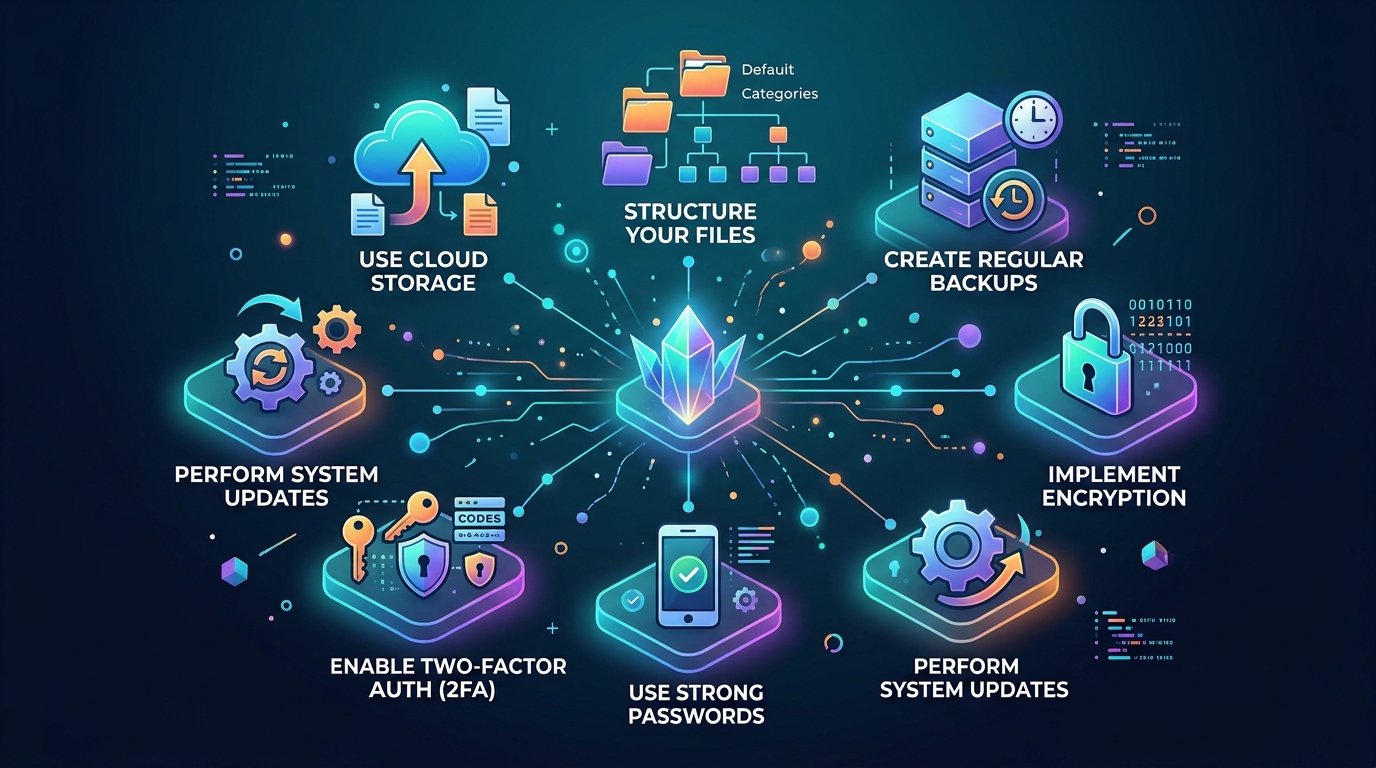
Simple routines that people can continuously follow are the first step toward protecting personal information. Start by keeping passwords in a trustworthy password manager and creating distinct passwords for each significant account. Turn on multi-factor authentication, particularly for social networking, cloud storage, bank accounts, and email. Update your operating system, browser, apps, and security software to fix known vulnerabilities. Regularly check the permissions of the application and eliminate any access that isn’t needed for its intended use. By taking these precautions, preventable risks can be decreased without needing all users to become cybersecurity experts.
Before disseminating material online, it is also crucial to give it significant thought. Keep private information private, double-check website addresses before entering login information, and be wary of unsolicited messages asking for money or account details. Choose secure websites when using public wifi and if you need extra network security, think about getting a reliable VPN. Keep in mind that a VPN does not completely safeguard your online identity or make phishing links safe. Use device locks, make backups of critical files, and, where necessary, turn on encryption. Secure account recovery techniques and safe backups can facilitate the recovery process in the event that a device is lost.
- Future trends in privacy technology
Artificial intelligence, more connected gadgets, evolving laws, and more awareness of digital rights will all influence privacy technologies in the future. Organizations will require better ways to understand what data is being used, restrict needless gathering, and lessen the exposure of sensitive information as AI systems handle massive amounts of data. Technologies that improve privacy may assist businesses and researchers in analyzing certain datasets while minimizing the need to disclose unprocessed personal data. These methods can include secure computing, differential privacy, and other strategies intended to restrict the disclosure of personal data, depending on the application. Their efficacy is contingent upon the particular hazards associated with their execution.
The creation of identity and authentication systems that prioritize privacy is another significant trend. While hardware security keys and other phishing-resistant techniques might enhance account protection, passkeys can lessen reliance on conventional passwords. Additionally, companies are focusing more on data reduction, which is gathering only the data required for a certain reason. Organizations may be able to find general trends using privacy-preserving analytics without granting each team member access to personally identifiable information. These advancements may make data protection more feasible, but they still call for openness, suitable governance, and unambiguous accountability for the handling of data.
Smart services and connected devices will make privacy technology more difficult. Internet of things sensors, wearable technology, connected cars, and smart home appliances can all gather data about daily routines, usage, location, and behavior. Users will require more precise privacy settings and more control over the information sent to service providers as these systems grow. Manufacturers can contribute by avoiding needless data collecting, offering relevant options, and creating products with secure defaults. Building technology that respects privacy from the start is the overarching objective. Future tools might provide more robust safeguards, but users and organizations still need to be aware of their limitations and make wise choices.

Conclusion
A proper digital life requires the use of privacy technology. Different data protection issues are addressed via encryption, privacy-focused browsers, password managers, VPNs, data anonymization, privacy management software, and secure messaging solutions. These solutions can lessen needless surveillance, safeguard private data, improve account security, and encourage ethical business activities when chosen and set up correctly.
However, total privacy cannot be ensured by technology alone. Users must maintain solid security practices, review permissions, install updates, and think carefully before disclosing critical information. Organizations must also set clear policies, train staff, and examine the dangers connected with collecting and retaining personal data. As artificial intelligence and linked gadgets continue to evolve, privacy protection will become even more vital. Understanding privacy technology now can help individuals and organizations make smarter choices and build a safer digital future.
Frequently asked questions
- What is privacy technology?
Privacy technology includes software, tools, and technical methods that help protect personal information, limit unnecessary tracking, and control access to sensitive data. Examples include encryption, password managers, privacy-focused browsers, and secure messaging applications.
- What are the best examples of privacy technology?
Common examples include encrypted messaging applications, password managers, VPN services, tracker-blocking browsers, multi-factor authentication, data masking systems, and privacy management software. The best choice depends on the information you want to protect and the risks you face.
- Is privacy technology important for small businesses?
Yes. Small businesses often collect customer contact details, payment information, employee records, and other sensitive data. Privacy technology can help protect these records, improve customer trust, reduce security risks, and support compliance with applicable data protection requirements.
- What is the difference between privacy technology and cybersecurity?
Privacy technology focuses on controlling how personal information is collected, used, shared, and protected. Cybersecurity focuses more broadly on protecting systems, networks, devices, and data against unauthorized access, attacks, and disruption. The two fields overlap because strong cybersecurity often supports better privacy.
- What is the future of privacy technology?
Future developments may include privacy-preserving artificial intelligence, advanced encryption techniques, secure digital identity systems, differential privacy, and stronger privacy controls for connected devices. These technologies aim to reduce unnecessary exposure of personal information while allowing useful digital services to continue operating.