Artificial intelligence is moving faster than most people expected. Every few months, we see new AI models that can write, code, analyze information, create content, understand images, and perform tasks that once required specialized software or human expertise.
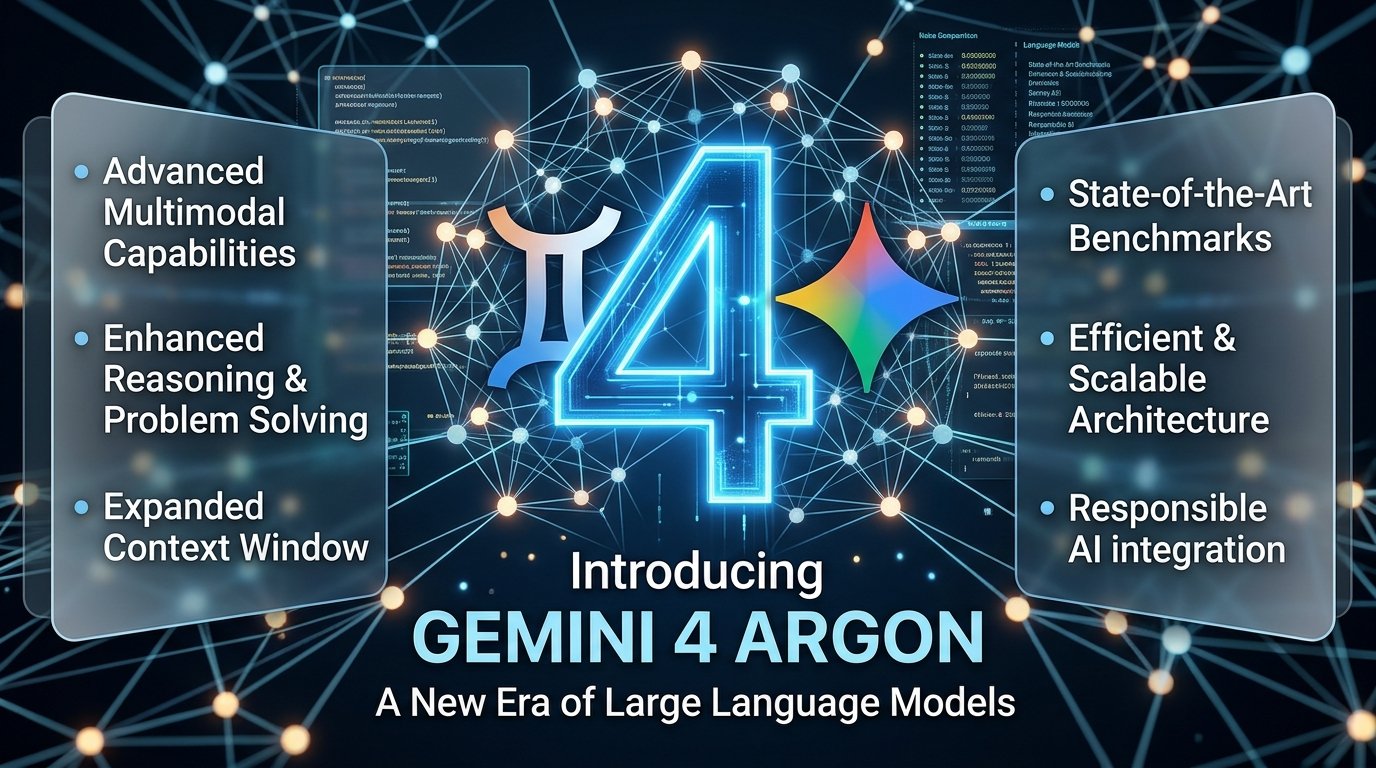
Now, Google has taken another major step with Gemini 4 Argon, its latest frontier AI model. Announced at the end of September 2026, Gemini 4 Argon is designed to handle complex, long-running workflows rather than simply answering individual questions. Google emphasizes that the model specifically targets software engineering, enterprise knowledge work like legal and financial tasks, cybersecurity, multimodal understanding, and advanced reasoning.
For everyday users, however, there is an important detail: Gemini 4 Argon is not yet broadly available to all. Google is initially giving access to a selected group of cybersecurity experts through its Fairwind program while it continues safety evaluations and prepares a wider release.
So, what exactly is Gemini 4? What makes Argon different from earlier Gemini models? What can it potentially do for developers, businesses, students, and content creators?
Let’s explore everything you need to know.
What Is Google Gemini 4?
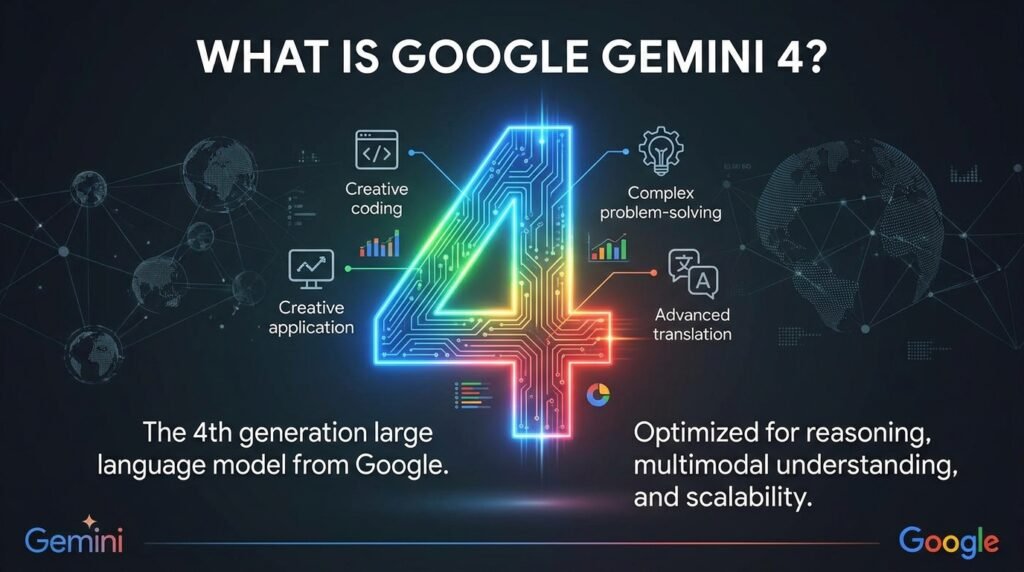
Google Gemini 4 is the company’s newest generation of frontier artificial intelligence, with Gemini 4 Argon currently representing the announced flagship model.
Unlike traditional software that follows a fixed set of instructions, Gemini is built to understand natural language and work across different types of information. The latest Argon model takes that concept further by focusing on complex workflows that may require multiple reasoning steps and actions.
Google describes Gemini 4 Argon as a model designed for tasks involving:
- Advanced reasoning
- Software engineering
- Coding and debugging
- Enterprise knowledge work
- Legal and financial workflows
- Cybersecurity defense
- Multimodal understanding
- Long-duration, multi-step tasks
- Computer use and agentic workflows
This change is an important shift in the direction of AI.
Earlier AI assistants were primarily used as question-and-answer tools. You asked something, received an answer, and then decided what to do next.
The newer generation of AI is increasingly designed to work through a problem from beginning to end.
That means the future of AI may be less about simply asking a chatbot questions and more about giving an AI system a goal and allowing it to complete a sequence of tasks.
Gemini 4 Argon: What’s New?
Gemini 4 Argon focuses heavily on complex professional work.
According to Google’s published information, Argon has been developed to maintain performance across long, multi-step tasks while combining reasoning, coding, multimodal understanding, and tool-based workflows.
1. Advanced Reasoning
One of the most important improvements is its ability to handle complicated problems that cannot easily be solved with a single response.
For example, a developer might ask an AI system to inspect a large software project, identify potential problems, propose changes, test the changes, and explain what was modified.
Instead of treating each step as a separate conversation, a more agentic model can potentially maintain the overall objective throughout the workflow.
This is where models such as Gemini 4 Argon are becoming increasingly interesting.
2. Stronger Coding Capabilities
Software development is one of the major areas targeted by Gemini 4 Argon.
Google reports strong performance in agentic coding evaluations and says Argon is being used internally for substantial engineering work. Its published benchmark results include high scores on several coding and software-engineering evaluations, although benchmark results should always be interpreted carefully because they do not necessarily represent every real-world programming situation.
For developers, this could mean AI assistance with:
- Understanding large codebases
- Finding bugs
- Writing new functions
- Refactoring existing code
- Creating tests
- Explaining complicated code
- Migrating code between technologies
- Working with development tools
- Automating repetitive engineering tasks
Google has also described internal uses of Argon for large-scale engineering projects, including work involving C/C++ code migration and other infrastructure tasks.
This doesn’t mean programmers are becoming unnecessary. Instead, the role of a developer may increasingly shift toward directing, reviewing, testing, and validating AI-generated work.
3. Gemini 4 for Business and Enterprise
Another major focus is enterprise knowledge work.
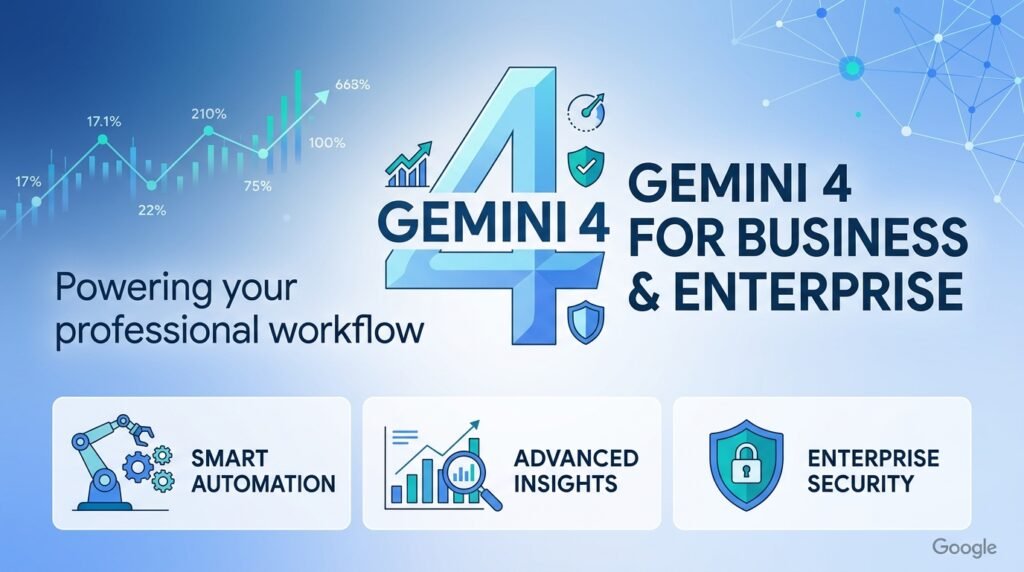
Businesses produce enormous amounts of information every day, including documents, spreadsheets, emails, contracts, reports, financial information, customer data, and internal knowledge.
Finding useful information inside all of that material can take hours.
An advanced AI model can potentially help employees search, summarize, compare, organize, and reason over large collections of business information.
Google specifically highlights legal and finance workflows as areas where Gemini 4 Argon is designed to perform.
Imagine a financial team asking an AI system to review a collection of documents, identify important figures, compare changes between reports, and prepare a structured summary for human review.
Or imagine a legal team using AI to organize large quantities of documents and identify relevant sections.
These applications still require professional oversight, especially when decisions have legal, financial, or regulatory consequences. But they demonstrate where enterprise AI is heading.
4. Cybersecurity
Cybersecurity is another major area for Gemini 4 Argon.

Google says Argon is capable of autonomously finding, validating, and patching critical software vulnerabilities.
This could become particularly valuable because cybersecurity teams often have to analyze huge amounts of code, logs, alerts, and technical information.
AI could help security professionals:
- Detect vulnerabilities
- Analyze suspicious behavior
- Review code
- Identify security weaknesses
- Suggest patches
- Test potential fixes
- Investigate incidents
- Automate defensive security workflows
Importantly, Google has emphasized defensive cybersecurity applications and safety measures around the release.
The company says Argon includes protections designed to reduce harmful misuse and improve resistance to indirect prompt-injection attacks.
5. Multimodal Understanding
Gemini has always been developed as a multimodal AI family, meaning its capabilities are not limited to plain text.
The broader Gemini ecosystem can work with different forms of information, and Google describes Gemini 4 Argon as having advanced multimodal understanding.
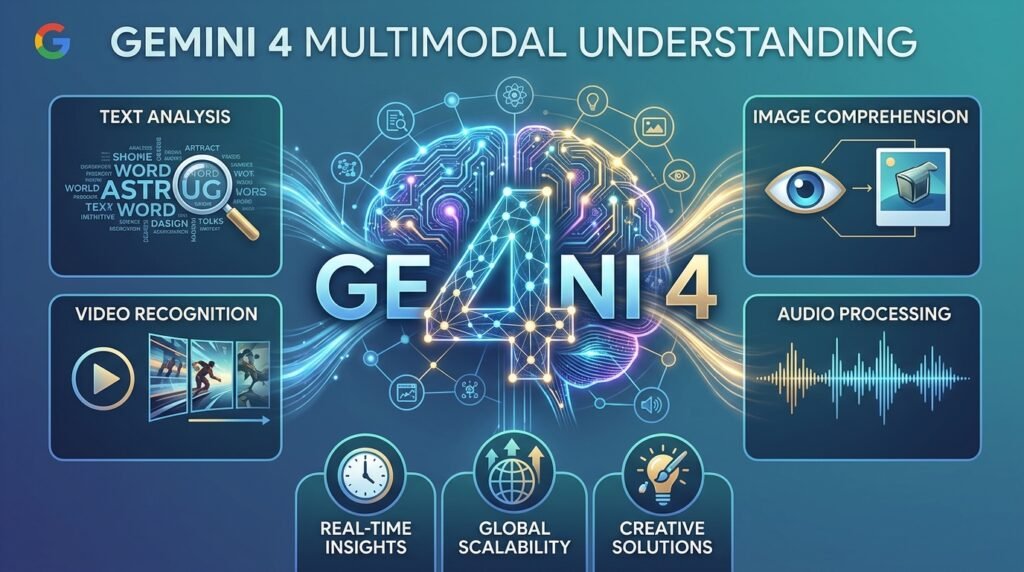
This is important because real-world information rarely exists only as text.
A business might have:
- PDFs
- Images
- Charts
- Videos
- Spreadsheets
- Audio
- Text documents
- Screenshots
- Software interfaces
An AI system capable of understanding multiple forms of information can potentially provide more useful assistance than a text-only chatbot.
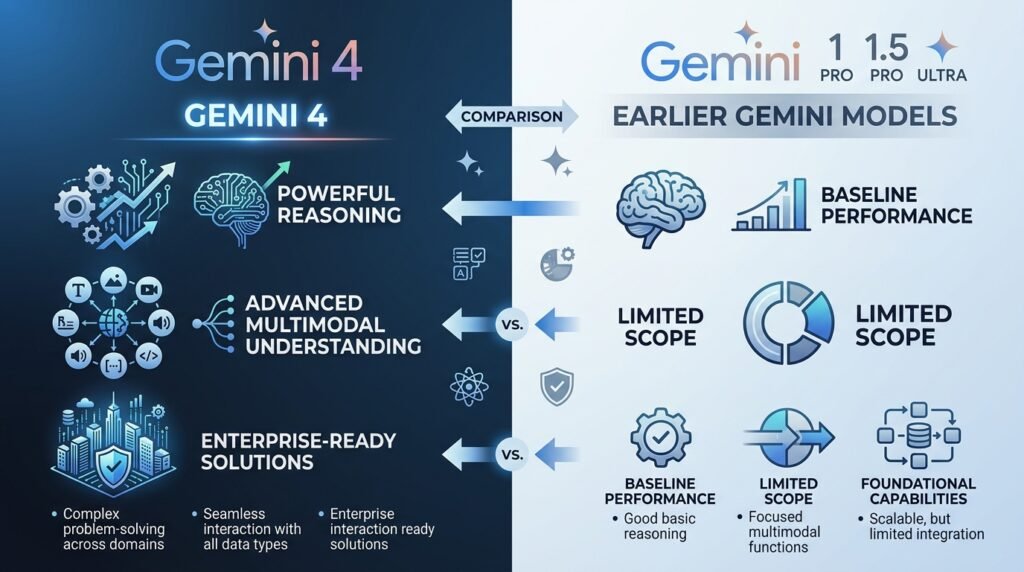
Gemini 4 vs. Earlier Gemini Models
Google’s Gemini family has developed rapidly.
Before Gemini 4, Google released several generations and specialized variants, including Gemini 3, Gemini 3.1, Gemini 3.5, Gemini 3.6, Gemini 3.7, and Gemini 3.8 models during 2026. Google’s official model-card listing shows the rapid expansion of the Gemini family across text, audio, image, and other capabilities.
The company also introduced specialized models such as Gemini Flash variants for efficient workloads.
Gemini 4 Argon represents a different emphasis.
Rather than focusing primarily on being a lightweight everyday model, Argon is positioned as a frontier model for demanding workflows.
In simple terms:
Earlier Gemini Models: Gemini 4 Argon Everyday questions: Yes, yes, but not its main focus. Coding is strong and designed for advanced workflows; reasoning is strong. Focused on complex reasoning Enterprise tasks supported a major focus on cybersecurity. Supported in specialized models Major focus: Multimodal understanding. Yes. Advanced long workflows are increasingly supported. Major design focus Agentic tasks: Growing central focus
The biggest difference is therefore not simply “more intelligence.”
It is the move toward AI that can participate in longer workflows and perform multiple steps toward a goal.
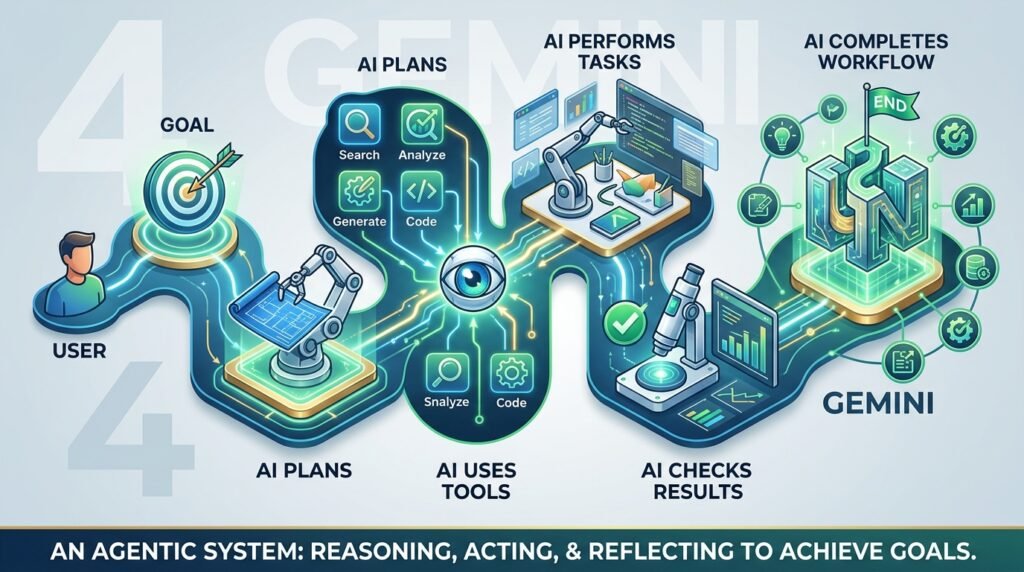
What Does “Agentic AI” Mean?
You will probably hear the term “agentic AI” more often as Gemini 4 becomes part of Google’s ecosystem.
But what does it actually mean?
A traditional chatbot generally works like this:
User → Question → AI Answer
An agentic system is closer to:
User → Goal → AI plans → AI uses tools → AI performs tasks → AI checks results → AI completes workflow
For example, instead of asking:
“How do I fix this software problem?”
A developer could potentially give an agent access to an appropriate development environment and ask it to investigate the problem, make changes, run tests, and report the results.
This is a much more ambitious use of artificial intelligence.
Google has been moving toward this model across its AI ecosystem. At Google I/O 2026, the company described an “agentic Gemini era” and introduced experiences designed to help AI move beyond generating responses toward taking actions.
Can You Use Gemini 4 Right Now?
This is one of the most important questions.
As of October 1, 2026, Gemini 4 Argon is not yet available as a normal public chatbot for everyone.
Google has begun a controlled release through its Fairwind program, initially providing access to selected cybersecurity experts. Google also says broader access will be phased in as it participates in additional evaluations and safety processes.
Therefore, websites or social media posts claiming that everyone can already access the full Gemini 4 Argon experience should be treated carefully.
Google’s Gemini ecosystem continues to offer other models and experiences that are available through products such as the Gemini app, Google AI Studio, and developer platforms.
The availability of specific models can vary by product, account, subscription, country, and release stage.
Gemini 4 for Students
Students are likely to benefit from the broader direction of Gemini even before Argon becomes widely available.
AI assistants can already help students:
- Understand difficult concepts
- Summarize study material
- Generate practice questions
- Explain programming concepts
- Improve writing
- Organize research
- Brainstorm project ideas
- Create study plans
However, students should use AI as a learning assistant rather than simply copying AI-generated answers.
The most useful approach is to ask AI to explain why something is correct, provide examples, challenge your understanding, and generate practice questions.
That turns AI from an answer machine into a study partner.
Gemini 4 for Content Creators
Content creators are another group that can benefit from Google’s rapidly expanding AI ecosystem.
A modern AI workflow can involve:
- Researching a topic
- Creating an outline
- Writing a first draft
- Generating headlines
- Creating social media posts
- Producing image prompts
- Summarizing the article
- Preparing SEO metadata
For a website such as AIOGuides.com, this can make content production much more efficient.
But there is an important distinction between AI-assisted content and low-quality automatically generated content.
Human judgment still matters.
Fact-checking, originality, useful examples, personal experience, editing, and genuine value are what make an article worth reading.
Gemini 4 and SEO
AI is also changing search engine optimization.
Search engines increasingly understand topics, entities, user intent, and context rather than relying only on exact keyword matching.
That means website owners should focus on creating content that genuinely answers readers’ questions.
For example, instead of repeatedly using the keyword “Gemini 4” throughout an article, a stronger article could answer related questions such as
- What is Gemini 4?
- What is Gemini 4 Argon?
- What can Gemini 4 do?
- Is Gemini 4 available?
- How is Gemini 4 different from previous Gemini models?
- Who can use Gemini 4?
- What can developers do with Gemini 4?
- Is Gemini 4 free?
This creates a more complete resource for readers.
Gemini 4 vs. ChatGPT
Gemini 4 Argon and OpenAI’s ChatGPT represent competing approaches within the rapidly developing frontier-AI market.
However, comparing AI models purely by asking which one is “better” can be misleading.
Performance depends heavily on the task, model version, tools, context, integrations, pricing, and availability.
Google’s published Gemini 4 Argon evaluations show strong results across selected knowledge-work, coding, science, multimodal, and cybersecurity benchmarks.
At the same time, benchmark scores are only one part of the picture.
For an ordinary user, the better tool may depend on what ecosystem they already use.
Someone deeply connected to Google Workspace, Android, Google Search, or Google’s developer ecosystem may value Gemini’s integration.
Another user may prefer a different AI system because of its writing style, coding workflow, available tools, or integrations.
The practical lesson is simple: choose an AI tool based on the work you need it to perform, not only on benchmark numbers.
Safety and Privacy
As AI systems become more capable, safety becomes increasingly important.
A model that can write text is one thing. A model that can interact with software, analyze code, and perform long-running tasks presents a different level of risk.
Google says Gemini 4 Argon has been developed with additional safeguards against harmful use, prompt injection, and potential misalignment. Google also describes monitoring and sandboxing measures for high-risk environments.
Users should still avoid treating AI as automatically trustworthy.
Important information should be checked before it is used in real-world decisions, especially in areas such as medicine, law, finance, cybersecurity, and business.
The Future of Gemini 4
Gemini 4 Argon is more than another chatbot update.
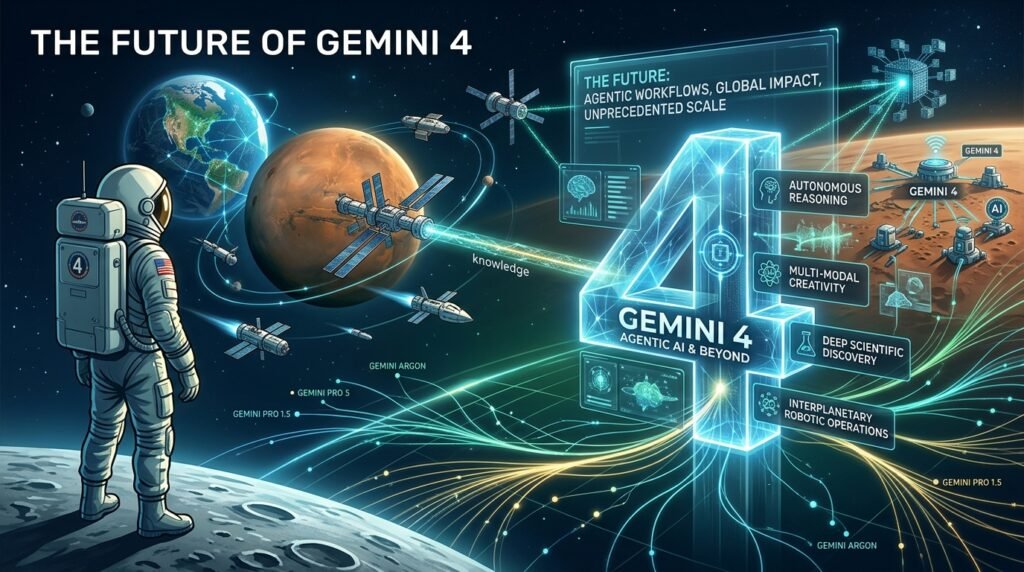
It represents a broader shift in Google’s AI strategy toward systems that can reason through complex problems, work with different types of information, use tools, and complete longer workflows.
The next stage of AI may therefore be less about asking:
“What can AI tell me?”
and more about asking:
“What can AI help me accomplish?”
That distinction could change how people use computers.
Instead of opening ten applications to complete a task, users may eventually describe the desired outcome and allow an AI agent to coordinate the required steps.
For developers, this could mean AI-assisted software engineering.
For businesses, it could mean automated knowledge workflows.
For cybersecurity teams, it could mean faster vulnerability detection and remediation.
For students, it could mean personalized learning assistants.
For content creators, it could mean faster research and production.
But these benefits will need to be balanced with human oversight, privacy considerations, security, and responsible deployment.
Final Thoughts
Google Gemini 4 Argon is one of the most significant developments in Google’s AI roadmap in 2026.
Its focus on advanced reasoning, coding, enterprise knowledge work, cybersecurity, multimodal understanding, and long-running workflows shows where frontier AI is heading.
However, it is important not to confuse an announcement with full public availability. As of October 1, 2026, Google is introducing Argon through a controlled rollout, beginning with selected cybersecurity experts while broader access is prepared.
For ordinary users, the larger story is the rapid evolution of the Gemini ecosystem. Google has already expanded Gemini into models for everyday use, coding, audio, image generation, video, agents, and enterprise applications.
Gemini 4 Argon gives us a glimpse of what the next generation of AI assistants could look like: systems that don’t simply answer questions but can understand objectives, reason through complex problems, use tools, and help complete real-world work.
The AI race is clearly moving from chatbots toward AI agents.
And Gemini 4 Argon is Google’s latest step in that direction.