Introduction
Database Management Systems of technology for managing, storing, organizing, and retrieving digital data is a database management system (DBMS). Databases are used in almost every modern company. Databases are used by banks to handle accounts and transactions, schools to keep track of students, hospitals to hold patient data, and online retailers to handle goods, clients, and orders. Large-scale information handling would become challenging, slow, and unreliable without efficient database management.

What Is a Database Management System?
Software that enables users and programs to communicate with a database is called a database management system. It offers tools for building databases, adding data, changing records, finding data, and deleting data as needed. Consider a website for online shopping, for instance. Millions or even thousands of product records may need to be stored on the website. A product’s name, price, description, category, stock level, and identification number are all possible. Every time a customer searches for a product, a database management system (DBMS) enables the website to arrange this data and get the appropriate entries. for a product.
How Does a DBMS Work?
A database management system (DBMS) serves as a link between stored data and users or applications. The database management system (DBMS) handles information requests from applications and obtains the relevant entries. The DBMS applies the desired action in accordance with the database’s configured rules and permissions when data has to be altered. For instance, a company may ask its database to locate every client that placed an order in a specific month. Database Management Systems query can swiftly find the pertinent information rather than having to manually search through thousands of records.
Types of Database Management Systems
There are several types of database management systems, and each is designed for different data requirements.
Relational Database Management Systems
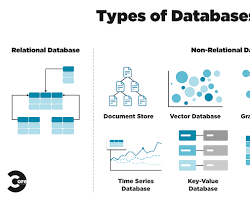
Information is kept in tables with rows and columns using a Relational Database Management System (RDBMS). Relationships between tables enable the effective organization of related data. Business applications, banking systems, accounting software, educational platforms, and numerous websites all make extensive use of relational databases. Relational database management system frequently employ SQL for information management.
NoSQL Database Management Systems
Alternative methods for storing data that might not readily fit into conventional relational tables are offered by NoSQL Database Management Systems. Document, key-value, graph, and wide-column database management system are examples of common NoSQL models. Applications needing adaptable data structures or specific methods for managing large-scale distributed data may find these technologies helpful.
Hierarchical Database Systems
Information is arranged in a tree-like shape using a hierarchical database. Parent-child relationships are used to link records. The hierarchical paradigm is still helpful for comprehending how certain kinds of structured data might be arranged, even if hierarchical systems are less used in many contemporary applications than relational and NoSQL databases.
Object-Oriented Database Syste
This is stored in an object-oriented database in a manner consistent with the objects used in object-oriented programming. Applications that require the direct storage of complicated objects and relationships may find this method helpful.
Key Features of a DBMS
A contemporary DBMS can offer a variety of practical features. Information can be maintained in an organized setting thanks to data management and storage. When needed, users can retrieve records and design suitable structures for various kinds of data. Data security aids in limiting who has access to specific data. Accounts, roles, and permissions can be created by organizations based on their needs .Database Management Systems Maintaining correct and consistent information is aided by data integrity.
Rules that prohibit the storage of specific erroneous or inconsistent records can be enforced by DBMS technology is helpful for managing classes as well. Courses, subjects, classrooms, teachers, and student registrations can all be kept up to date by educational institutions. The database can link a student’s record with the relevant course details when they enroll in a course. This facilitates the efficient management of numerous students and classes by educational institutions..
Advantages of Database Management Systems
Effective Database Management Systems is one of a DBMS’s main benefits. Instead than depending solely on individual files, organizations may handle vast amounts of data in an organized setting. Improved data accessibility is an additional benefit. Information can be retrieved when needed by authorized users and apps. Employee productivity may increase as a result of not having to manually look through multiple documents. Data consistency can also be enhanced using a DBMS. Organizations can set guidelines for data entry and updating when information is controlled via a central database.
DBMS in Business
Database management systems are used by businesses for a variety of objectives. Databases can be used for accounting, order processing, employee records, sales tracking, inventory management, and customer relationship management. An online retailer might, for instance, have distinct databases for orders, delivery, payments, products, and customers. The system can integrate data from several sources to process an order placed by a consumer.

DBMS in Education
Databases are used by educational institutions to handle data regarding students, instructors, classes, grades, attendance, and scheduling. For instance, a university database may keep student profiles and link them to classes and test scores. Information can be retrieved by authorized personnel without having to go through thousands of separate paper Student information management is one of the main applications of DBMS in education.
An institution can save Database Management Systems student data in a centralized database rather than keeping individual paper files for each student. A student’s academic records, enrollment information, attendance history, or test scores can all be easily found by administrators. This can improve the efficiency of administrative procedures and cut down on repetitious paperwork..
DBMS in Healthcare
Large volumes of data, such as patient records, appointments, test results, medical histories, and administrative data, are managed by healthcare organizations. With the right applications, database systems can assist authorized healthcare personnel in accessing pertinent data. Additionally, they can assist with billing, reporting, scheduling, and other administrative tasks.
DBMS in Finance and Banking
Database Management Systems are crucial to banks and other financial organizations. Accurate processing and storage of customer accounts, transactions, payments, loans, and other financial data is required. The database system may need to update several entries while preserving consistency when a customer transfers money. Database transaction mechanisms assist systems in managing these kinds of actions in accordance with their specifications and design. Because inaccurate data or unauthorized access can have major repercussions, security is especially crucial in financial systems.
Database Administrators
The person in charge of overseeing and maintaining database systems is known as a database administrator (DBA). Database configuration, user access management, performance monitoring, backup planning, and database security maintenance are some of their duties. Additionally, Database Management Systemsadministrators can help developers improve database performance and troubleshoot technical issues. Database management can be a specialized position requiring multiple people in larger businesses.
DBMS Security
Because databases may hold sensitive and important data, database security is crucial. Access control, auditing, authorization, authentication, and other security features can all be implemented by a DBMS. User permissions should be properly managed by organizations. In principle, workers should only be granted access necessary to fulfill their duties. Regular security evaluations and robust authentication can also lower needless risks. Additional security levels can be provided via encryption, monitoring, safe backups, software updates, and suitable network precautions.
Challenges of Database Management Systems
DBMS technology has many advantages, but there are drawbacks as well. Large databases may need a lot of processing power, specific expertise, and continuous upkeep. Performance issues might also arise from poorly constructed databases. If the system is not properly planned and optimized, queries may get slower as the amount of information increases. Data quality is just as crucial. Inaccurate information cannot be automatically corrected by a modern DBMS. Organizations require procedures that guaranty the accuracy, completeness, and proper maintenance of data.

The Future of Database Management Systems
Alongside cloud computing, AI, big data, and distributed systems, database technology is still evolving. Database Management Systems that can manage massive volumes of data and enable applications in various contexts are becoming more and more necessary for organizations. Data management is increasingly linked to artificial intelligence. Databases and artificial intelligence are probably going to get more interconnected.
AI-powered technologies can help database administrators and developers with activities including creating queries, evaluating data, spotting anomalous activity, keeping an eye on performance, and automating specific database procedures. This can increase the effectiveness of database management while freeing up experts to concentrate on more difficult jobs requiring human judgment.
analysis, query support, monitoring, and automation are among the tasks that AI-based products may help with. Database Management Systems specialists will continue to be crucial in making sure that data is kept, safeguarded, and utilized efficiently as these technologies advance.
Conclusion
An essential component of contemporary digital technology is a database management system. It offers the resources required to effectively store, arrange, retrieve, safeguard, and manage information. Databases support many of the services individuals use on a daily basis, including banks, hospitals, schools, businesses, websites, and mobile applications
Students, developers, business professionals, and anybody else interested in information technology can all benefit from understanding DBMS ideas. Effective database administration will continue to be crucial to creating dependable and secure technology systems as businesses continue to produce greater amounts of digital data.For instance, a university database may keep student profiles and link them to classes and test scores. Information can be retrieved by authorized personnel without having to go through thousands of separate paper records.
Nearly every industry can benefit from database management solutions. Databases can be used by businesses to handle clients, goods, staff, sales, and inventories. Healthcare businesses can handle patient and administrative records, while educational institutions can arrange student and course information. Database systems are used by banks and other financial institutions to handle transactions and keep track of account information. Databases are also essential for storing user accounts, information, preferences, and activity on websites and mobile applications..