
Introduction
Robotics Technology it integrates mechanical engineering, electronics, computer science, artificial intelligence, sensors, and software to build machines that can carry out physical activities, robotics is one of the most significant fields of contemporary technology. Nowadays, robots are not just found in factories where they are used to continually construct goods. These days, robotic systems are capable of a wide range of specialized tasks, including transporting items, helping medical experts, cleaning buildings, supporting agriculture, and exploring hazardous regions. 542,000 industrial robots were installed globally in 2024, more than twice as many as ten years prior, according to the International Federation of Robotics (IFR).Robotics Technology in computation, sensors, cameras, machine learning, batteries, and connection are directly linked to the development of robotics.
What Is Robotics?
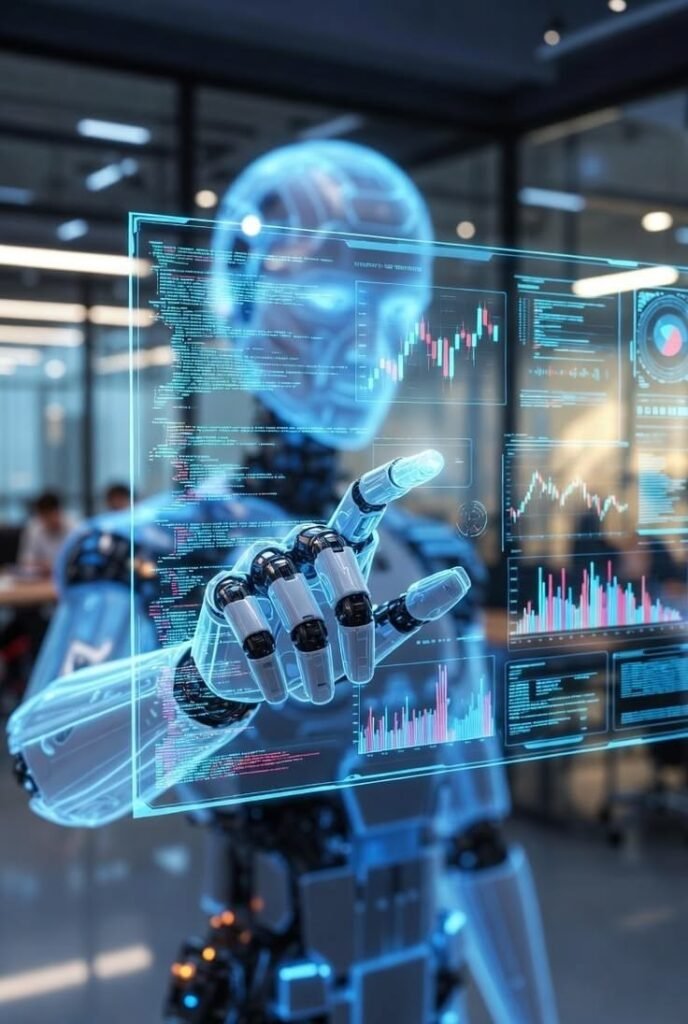
The branch of technology known as robotics deals with creating, constructing, programming, and managing robots. Generally speaking, a robot is a machine that uses a combination of mechanical parts, electronic systems, sensors, and software to perform physical actions. A robot can function autonomously, obey commands from a human operator, or combine automated decision-making with human oversight, depending on its design
A basic robotic system typically consists of a number of crucial components. Actuators produce movement, while sensors enable the machine to gather data about its surroundings. The robot’s motors and other parts receive instructions from a controller that processes data. The robot’s response to commands and sensor data is decided by software. Cameras, AI models, wireless connectivity, mapping technologies, and complex navigation systems are examples of more sophisticated systems.
How Robotics Technology Works
Robotics technology have Hardware and software interact to power robotics. Consider a robot at a warehouse that has to transport a package from one place to another. Its software may determine a path, its sensors may identify impediments, and its motors may propel the robot along that path. The robot may use fresh sensor data to modify its movement if something obstructs its path.
Robotics technology can be improved by artificial intelligence. For instance, a computer vision-equipped robot might use cameras and machine learning algorithms to recognize objects. Sensors and mapping software can be used by a mobile robot to determine its location. Compared to conventional industry production lines, these technologies enable robots to carry out jobs in less predictable circumstances.
Industrial Robotics
Among the most well-known uses of robotics are industrial robots. Welding, painting, assembling, material handling, packaging, and machine tending are just a few of the many manufacturing jobs that they are utilized for. They are useful in manufacturing settings because of their capacity to carry out accurate and repetitive tasks..
The IFR reports that 542,000 industrial robots were installed worldwide in 2024, with 74% of new deployments taking place in Asia. In that year, China accounted for 54% of all industrial robot installations worldwide.
Robotics technology a correctly configured robot can repeat a task with a high degree of precision, industrial robotics can increase consistency. Additionally, professions involving heat, dangerous materials, big objects, or repetitive motions can benefit from the usage of robots.
Service Robotics
The purpose of service robots is to carry out practical activities outside of conventional industrial manufacture. They can be utilized in a variety of settings, including hotels, warehouses, hospitals, offices, restaurants, retail stores, and airports.
According to IFR, sales of professional service robots increased by 9% to nearly 200,000 in 2024. With 102,900 units sold, transportation and logistics was the leading application group for professional service robots, followed by professional cleaning and hospitality.
Transporting goods, cleaning floors, directing guests, providing materials, and supporting certain professional duties are just a few of the jobs that service robots can carry out. Robotics technology have application shows how robotics is permeating common commercial settings and transcending traditional manufacturing.
Medical Robotics
Robotics technology application of robotics is healthcare. Surgery, rehabilitation, diagnostics, laboratory procedures, and other medical applications can all be supported by medical robots. These devices are made to assist skilled workers in carrying out certain operations with precise and controlled movements.
According to the IFR, sales of medical robots reached over 16,700 units in 2024, a 91% increase. Additionally, the demand for surgical robots rose by 41%, while rehabilitation and non-invasive therapeutic robots showed particularly robust growth..
Agricultural Robotics
Robotics technology is being used more and more in agriculture to solve issues including labor scarcity, precision farming, and the requirement to effectively manage vast areas. Planting, harvesting, crop monitoring, weeding, milking, and other farming tasks can all be aided by agricultural robots.
Nearly 19,500 agricultural robots were sold in 2024, despite a modest fall from the previous year, according to IFR’s 2025 service-robot report
Robotics in Transportation and Logistics
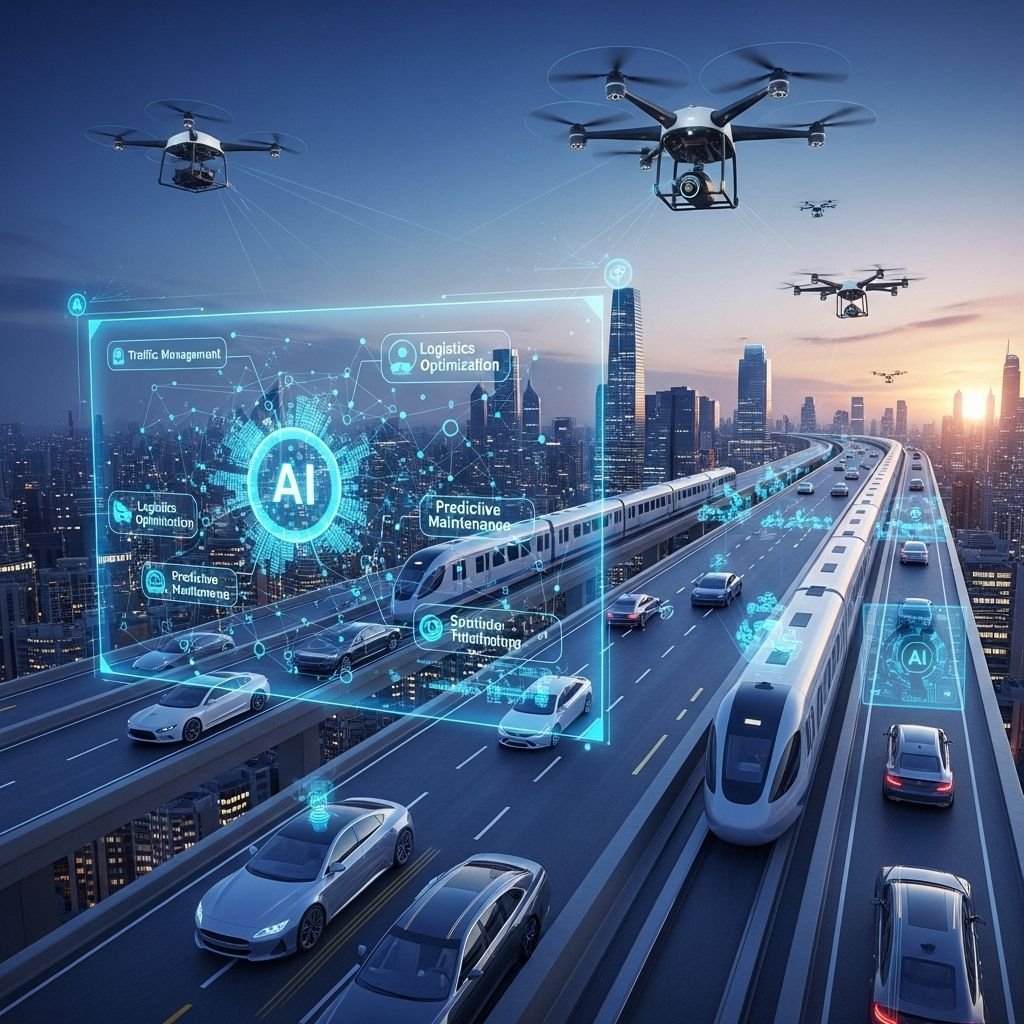
Robotics technology are being used more often in warehouses and distribution facilities to move goods and supplies. Autonomous mobile robots (AMRs) are capable of moving cargo between packing stations, storage spaces, and other sites.
One of the biggest uses of professional service robots at the moment is logistics. According to IFR, 102,900 transportation and logistics robots were sold in 2024, a 14% rise .These devices can cooperate with warehouse workers to lessen the need for repetitive transportation and walking.
Robotics and Artificial Intelligence
The connection between artificial intelligence and robotics is becoming more and more significant. While AI can assist robotic systems in interpreting data and making judgments in increasingly complicated scenarios, traditional robots frequently follow predetermined instructions.
Robotics technology one example is computer vision. A robot can identify things, spot patterns, or estimate positions using cameras and AI algorithms. Additionally, machine learning can enhance a system’s capacity to carry out specific data-driven tasks.
AI does not imply complete autonomy for all robots. AI is one part of a broader robotic system in many real-world applications. Human supervision, software, safety mechanisms, control systems, sensors, and mechanical design are still crucial.
Collaborative Robots
Cabot’s, also known as collaborative robots, are made to operate in settings where humans and robots share tasks. While collaborative systems are built with technologies meant to facilitate safer engagement with human workers, traditional industrial robots may operate inside restricted areas for safety concerns.
Cabot’s are useful for jobs like material handling, machine tending, packing, assembling, and inspection. Businesses who need to automate smaller production processes or regularly switch up manufacturing activities may find them appealing due to their versatility.
Humanoid Robots
Humanoid Robotics technology are made with a human-like bodily structure, which typically consists of a head, torso, arms, and legs. The objective is to build machines that can function in contexts intended for humans, not just to make robots appear human.
Because a machine that resembles a human may possibly use doors, stairs, tools, workstations, and other infrastructure designed for humans, humanoid robotics is gaining a lot of attention. Nevertheless, there are still a lot of humanoid applications under development, and real-world implementation differs greatly between projects.
In a position paper analyzing the technology and its potential applications, the IFR recognized humanoid robots as a key area of robotics development.
Benefits of Robotics
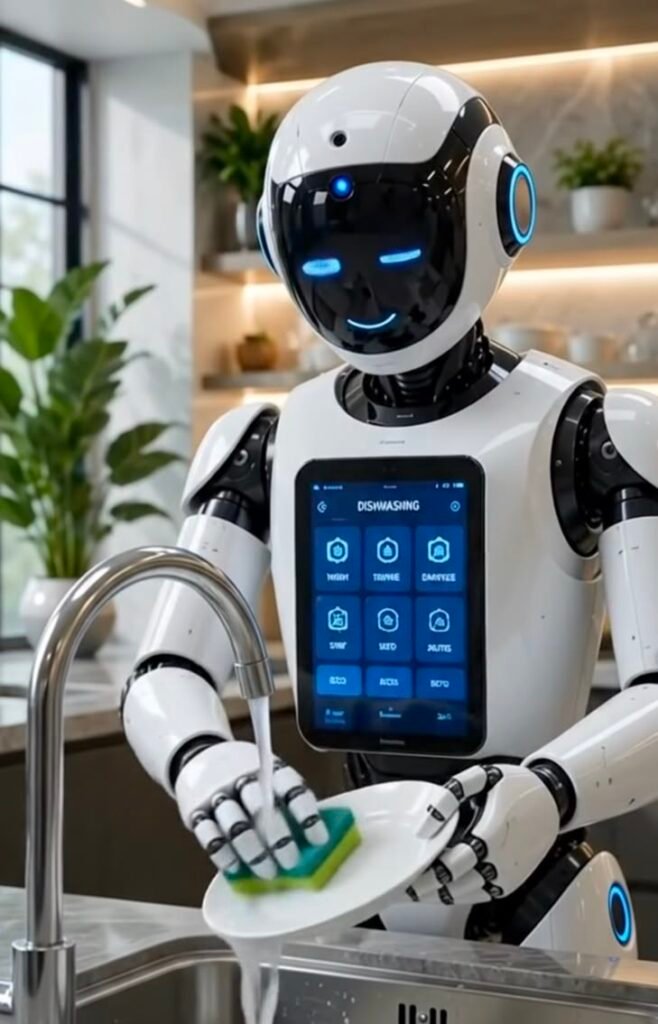
In a variety of businesses, robotics technology can offer a number of useful advantages. Robots may work in areas that could be hazardous or challenging for humans, and they can reliably complete repetitive jobs. Additionally, they can assist organizations with activities that call for precise movement or constant operation.
Productivity is an additional advantage. Certain steps in a production or logistics process can be automated by a robotic system, freeing up workers to concentrate on jobs requiring judgment, communication, creativity, or specialized knowledge.
Depending on the use, the advantages change. Robots used in factories, agriculture, surgery, and warehouses serve rather distinct functions. Therefore, the particular work, environment, safety regulations, and operational expenses should all be taken into account when evaluating the usefulness of robotics.
Challenges of Robotics
Robotics technology has benefits, but it also has drawbacks. Sophisticated robotic systems can be expensive to develop, install, program, and maintain. Employers may also require workers with specialized training in electronics, software, engineering, maintenance, and system integration.
Another important factor is safety. Robots that operate in close proximity to humans require suitable safety measures and dependable control systems. There could be dire repercussions if a huge industrial machine, driverless car, or medical robot fails.
Economic and labor issues are also present. Robotics technology has the potential to alter employee activities and raise the need for technological expertise. It is important to use caution when making generalizations about employment implications because research and industry evidence can vary based on the technology, industry, and workplace.
Future of Robotics
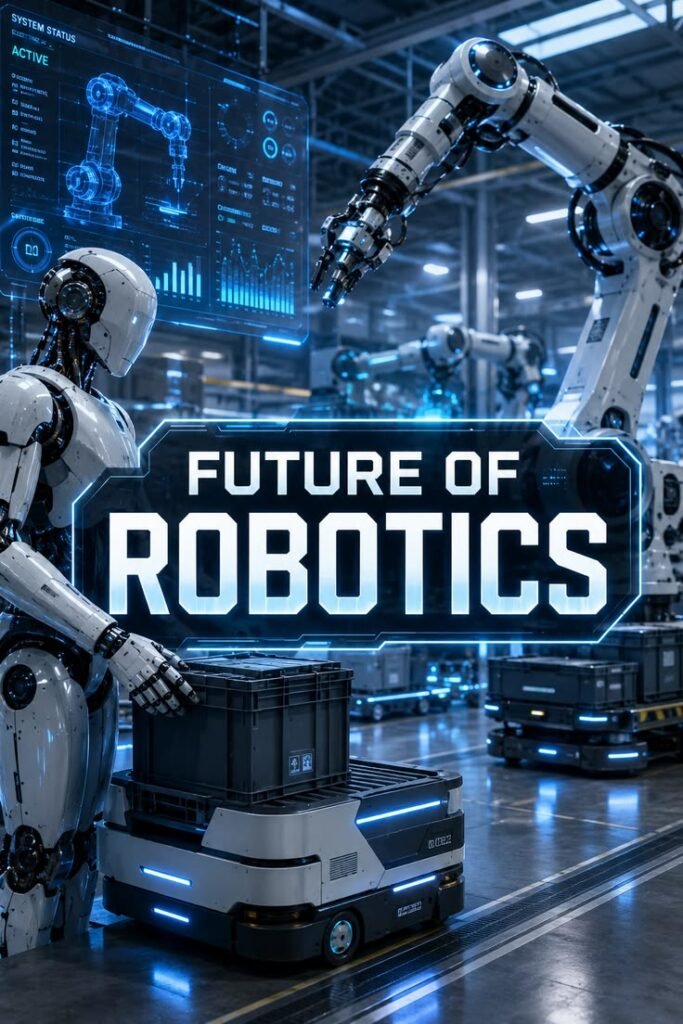
More integration of AI, sensors, cloud computing, edge computing, and autonomous systems is probably in store for Robotics technology in the future. While advancements in hardware are making machines more mobile and adaptive, robots are growing increasingly capable of comprehending their environment.
Additionally, the robotics sector is growing outside of conventional industries. According to IFR’s 2026 trends study, new commercial applications and technology innovation are key factors influencing the sector.
However, robotics won’t necessarily advance in a single direction. Simple automation will be used in some applications, while sophisticated mechanical systems and advanced AI will be combined in others. A varied ecology of robots created for particular activities and settings is probably what will emerge.
Conclusion
The way machines interact with the real world is changing thanks to robotics. Robotics technology are being used in a growing number of industries, including industrial manufacturing, warehouse logistics, healthcare, agriculture, cleaning, and household chores. The scope of this development is shown by current industry data: professional and customer service robots are extending into new areas, and hundreds of thousands of industrial robots are installed annually worldwide.