- Introduction to E-Commerce Chatbots
- What Are E-Commerce Chatbots?
- How E-Commerce Chatbots Work
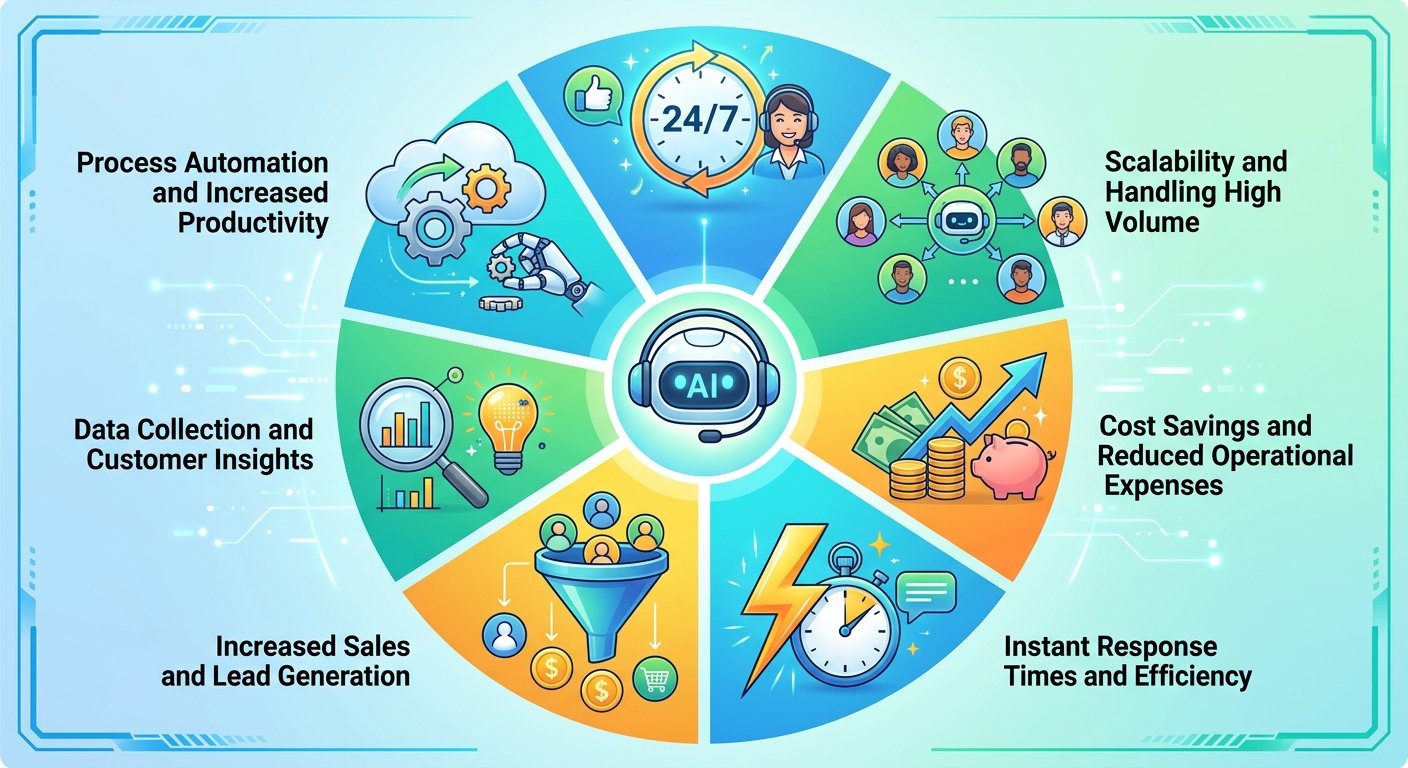
- 7 Powerful Benefits of E-Commerce Chatbots
- 1. Improve Customer Support
- 2. Increase Online Sales
- 3. Provide Personalized Shopping
- 4. Offer 24/7 Customer Assistance
- 5. Simplify Product Recommendations
- 6. Improve Customer Engagement
- 7. Reduce Business Costs
- Common Uses of E-Commerce Chatbots
- Important Features of E-Commerce Chatbots
- Popular E-Commerce Chatbot Examples
- Challenges of Using E-Commerce Chatbots
- Future Trends in E-Commerce Chatbots
- Conclusion
- Frequently Asked Questions
Introduction to E-Commerce Chatbots
Online shopping has become an important part of modern life. People purchase clothing, electronics, groceries, beauty products, furniture, and many other items through online stores. However, customers often need assistance before completing a purchase. They may have questions about product prices, sizes, delivery charges, payment methods, return policies, or order tracking. If they cannot find answers quickly, they may leave the website and purchase from another store. This is where e-commerce chatbots become useful. These intelligent digital assistants help online businesses communicate with customers, answer common questions, and provide shopping assistance through automated conversations.
Thank you for reading this post, don't forget to subscribe!Artificial intelligence has made chatbots more advanced and helpful than traditional automated messaging systems. Modern AI-powered chatbots can understand customer questions, recommend suitable products, provide information, and guide shoppers through different stages of the buying process. They can also support businesses by managing repetitive customer inquiries and improving communication. Whether you operate a small online shop or a large e-commerce platform, chatbots can help create a smoother shopping experience. In this article, we will explore the meaning, benefits, uses, features, and future trends of e-commerce chatbots and explain how they can support online business growth.
What Are E-Commerce Chatbots?
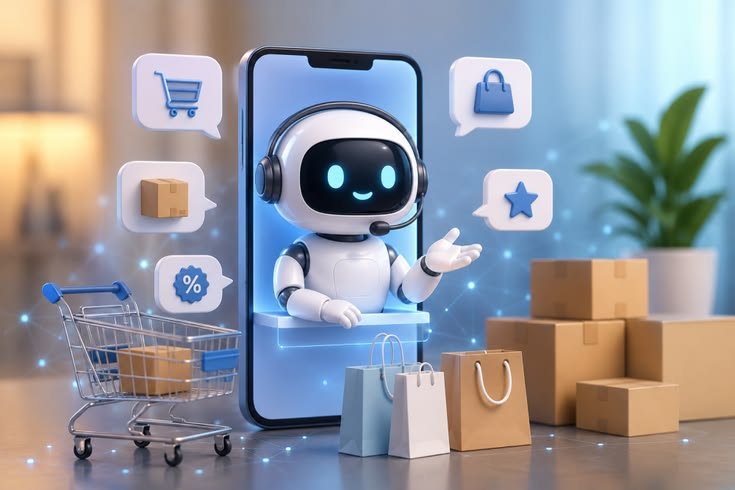
E-commerce chatbots are automated computer programs designed to communicate with customers on online shopping websites, mobile applications, and messaging platforms. They use predefined instructions or artificial intelligence to understand customer requests and provide relevant responses. Their main purpose is to make online shopping easier by helping customers find products, answer questions, and receive assistance without always contacting a human customer service representative.
For example, imagine that someone visits an online clothing store and wants to purchase a jacket. The customer may ask a chatbot about available sizes, colors, prices, and delivery options. Instead of searching through several pages, the shopper can communicate directly with the chatbot and receive helpful information. Some advanced systems can also recommend similar products based on customer preferences. This makes shopping more convenient and saves time for both customers and businesses.
E-commerce chatbots are useful for businesses of different sizes. Small retailers can use them to answer frequently asked questions, while larger companies can connect them with inventory systems, customer databases, and order management platforms. Their capabilities depend on the technology, integrations, and information available to them.
How E-Commerce Chatbots Work
E-commerce chatbots work by receiving customer messages, interpreting their meaning, and generating suitable responses. Traditional chatbots generally follow predefined rules and menus. For example, a customer might select an option such as “Track My Order” or “Return a Product.” The chatbot then follows a programmed process to provide the requested information.
Modern AI chatbots can understand natural language and recognize different ways of asking the same question. Technologies such as natural language processing and machine learning help them interpret messages and identify the user’s intentions. Generative AI systems can also create conversational responses based on the information and context available to them.
Some chatbots connect with business systems to retrieve useful information. For example, an integrated chatbot might check an order status, display product availability, or provide information about a delivery. More advanced systems may assist with transactions, although payment processing and account changes should use secure, authorized systems.

7 Powerful Benefits of E-Commerce Chatbots
- Improve Customer Support
One of the biggest advantages of e-commerce chatbots is their ability to improve customer support. Online shoppers regularly ask questions about products, payments, delivery services, refunds, and account problems. Answering every question manually can take a significant amount of time, especially when a business receives hundreds or thousands of customer messages. Chatbots can handle many routine inquiries automatically and provide quick responses.
For example, a customer visiting an electronics website may want to know whether a particular smartphone is available. Instead of waiting for an employee to respond, the customer can ask the chatbot and receive information if the system has access to current inventory data. Similarly, shoppers can ask about return policies, shipping options, or product specifications. This makes it easier to find information and continue shopping.
Additionally, chatbots assist customer support workers in handling their workload. Workers can devote more time to managing complex grievances, peculiar demands, and delicate circumstances that call for individualized care. A chatbot should provide a way to communicate with a human agent when it is unable to comprehend a query or address an issue. A better customer service experience can be produced by combining automated and human support.
- Increase Online Sales
E-commerce chatbots can help businesses enhance their sales possibilities by pointing customers toward relevant products. Many customers visit online merchants without knowing exactly what they want to purchase. They may compare several products, check for recommendations within a certain price, or ask about features. A chatbot can ask relevant questions and help customers explore their options.
For example, a consumer searching for a laptop might tell the chatbot that they need a device for studies, office work, and everyday browsing. The chatbot can suggest suitable products based on the store’s product descriptions, available prices, and attributes. This makes the purchasing process easier and may encourage customers to complete their purchases.
Chatbots can also provide information on product bundles, discounts, promotions, and related items when these details are available. They could help customers understand the differences between different products before they make a decision. However, companies should ensure that recommendations are accurate and unambiguous. The objective should be to help consumers make informed decisions rather than forcing them to purchase unnecessary items.
- Provide Personalized Shopping
Personalization is a crucial element of modern online shopping. Customers have different needs for purchases, tastes, spending caps, and interests. E-commerce chatbots can exploit information exchanged during conversations to offer more relevant assistance. Instead of giving every visitor the same recommendations, they can help customers select products that better fit their needs.
When a customer visits an online beauty shop, for example, they could request skincare goods that fit their budget. The chatbot can outline the features of the options that are offered. In a similar vein, a shoe buyer might provide their preferred color, size, and price range. These details can be used by the chatbot to reduce the number of options.
Some advanced chatbots can use stored preferences or allowed client history to make recommendations more relevant. However, companies must adhere to privacy laws and handle customer data with caution. They should explain how personal data is collected and avoid requesting unnecessary sensitive information.

- Offer 24/7 Customer Assistance
E-commerce chatbots can offer automated service 24/7, providing clients with basic information when they visit an online store. For example, a consumer perusing an online furniture store at midnight might want to know about available payment options or shipping fees; a chatbot can get these facts without requiring a customer service representative to be online. Guidance regarding product categories, store policies, and frequently asked questions can also be provided to customers. Customers that purchase late at nite, on weekends, or from different time zones may find it challenging to contact traditional customer support departments because they usually have established operating hours.
Availability 24/7 is especially helpful for global online businesses. It can enhance information access and reduce wait times. However, the availability of chatbots around-the-clock does not ensure that every problem can be resolved automatically. Human assistance may still be required for unusual account issues, payment disputes, and complicated delivery concerns.
Companies should indicate when a human agent is available and provide a straightforward way to ask for more help. This helps users understand what the chatbot can do and prevents them from getting angry when a problem requires more assistance.
- Simplify Product Recommendations
It may occasionally be difficult to find what you’re looking for because online stores have enormous product inventories. It can take a long time to compare product reviews, features, prices, and descriptions. E-commerce chatbots can expedite this process by helping clients identify products that suit their needs.
For example, a customer looking for wireless headphones would ask about price, compatibility, sound quality, and battery life. The chatbot may compare available products using exact information from the store’s catalog. It may provide alternatives when a particular item is unavailable.
Product recommendations can be especially useful in industries like electronics, clothing, home appliances, recreational goods, and cosmetics. A chatbot can help clients narrow down their alternatives by asking about their needs and preferences.
Businesses should regularly update their product information to ensure that suggestions remain accurate. Consumer confidence might be damaged by inaccurate pricing, outdated specifications, or unavailable products. When connected to reliable product and inventory information, chatbots can be helpful shopping assistants that help consumers make smarter choices.
- Improve Customer Engagement
Customer engagement is the process of fostering positive relationships between a business and its customers. E-commerce chatbots can boost customer engagement by making it easier for customers to connect with an online company. Instead of merely browsing silently, customers may ask questions, offer comments, and receive assistance while viewing a variety of items.
For example, a chatbot on a fashion website might help visitors identify new collections, understand clothing sizes, or compare different styles. A grocery store chatbot might help customers understand available delivery options or locate food categories. The ease and interaction of the purchasing process are improved by these conversations
Chatbots can also help with promotional communication when customers have agreed to receive relevant messages. They may provide information about new arrivals, special discounts, and seasonal promotions via authorized means. Businesses should avoid sending excessive or uninvited messages because this can damage their customer relationships.
The foundation of an effective engagement strategy is genuine value. Customers are more likely to appreciate a chatbot when it comprehends their objectives, offers helpful answers, and makes it easy to carry on or end a conversation.
- Reduce Business Costs
Customer support management requires staff, communication systems, training, and other company resources. For online shops who get a lot of repetitive questions, manually responding to each one can get expensive. By automating numerous repeated transactions, e-commerce chatbots can help businesses make better use of their resources.
For example, a chatbot can answer common questions about product categories, order tracking, store opening information, and shipping regulations. This reduces the number of standard questions that employees are required to answer independently. Support staff can then focus on problems that require investigation, knowledge, or face-to-face interaction.
Chatbots can also help businesses organize customer inquiries and discover issues that are frequently mentioned. Companies can use this information to improve product descriptions, respond to often asked queries, and make their websites more user-friendly.
However, using a chatbot is not totally free. Businesses may have to pay for staff training, maintenance, software subscriptions, and integrations. They also need to monitor chatbot performance and correct errors. The best approach is to compare the total cost of installation with the time saved and improvements in customer service.
Common Uses of E-Commerce Chatbots
There are numerous useful uses for e-commerce chatbots during the online buying process. They are not just used to respond to consumer inquiries. Before, during, and after a purchase, they can assist customers.
One common use is product discovery. Customers can identify their needs and receive recommendations by using the available product catalog. This can make it easier to browse a large online store without having to manually go through every category.
Another important application is order tracking. When a chatbot is connected to an authorized order management system, it can help customers monitor the progress of their purchases. Information about dispatch, delivery status, and order confirmation may be supplied.
Chatbots can also assist with returns and refunds by explaining the store’s policies and helping customers with the required procedures. They may provide information on payment methods, account management, delivery costs, and discounts. Several methods can help with shopping cart support by offering answers when a customer is uncertain about completing a transaction.
Other common uses include:
These applications can increase convenience when chatbots have access to precise information and clear instructions. Examples include responding to commonly asked questions, offering product comparisons, explaining shipping and return policies, assisting customers in finding product sizes and colors, providing information about specials, gathering customer feedback, and helping customers navigate websites.
Important Features of E-Commerce Chatbots
Multilingual support is also important for businesses serving customers from different regions. It can help shoppers communicate in their preferred languages, although translations should be checked for accuracy when dealing with important product or policy information.

Other useful features include conversation history, secure integrations, order tracking, analytics, and human-agent handover. Businesses should also look for systems that allow them to update responses and monitor performance.
The following table summarizes several important features:
| Feature | Main purpose | Benefit |
|---|---|---|
| Natural language processing | Understand customer messages | Easier communication |
| Product recommendations | Suggest relevant products | Better shopping experience |
| Order tracking | Retrieve order information | Convenient assistance |
| Multilingual support | Communicate in different languages | Wider customer access |
| Customer analytics | Review chatbot interactions | Better business decisions |
| Human handover | Connect customers with employees | Improved problem resolution |
| Product catalog integration | Access store information | More accurate answers |
Popular E-Commerce Chatbot Examples
Online organizations might investigate chatbot and conversational AI solutions offered by a number of platforms. Different features, integrations, and cost structures are provided by each platform.
Through supported shopping conversations, Shopify Inbox facilitates communication between Shopify merchants and customers. It can assist with consumer inquiries and assist companies in handling visitor interactions.
Businesses may help website visitors and handle customer conversations using Tidio’s customer service and AI-powered automation tools.
Businesses may handle customer questions and support workflows with the help of Intercom’s customer communication and AI support capabilities.
Zendesk provides AI-powered customer support software that helps businesses handle customer care interactions.
Challenges of Using E-Commerce Chatbots
While e-commerce chatbots have many benefits, companies should be aware of their limitations before putting them into practice. Misunderstanding consumer inquiries is a frequent problem. A chatbot could overlook crucial context, fail to identify an odd request, or give a response that doesn’t address the client’s issue.
Inaccurate information presents another difficulty. Customers may make judgments based on deceptive responses if a chatbot employs out-of-date product prices, inaccurate shipping information, or obsolete return policies. Companies should link chatbots to trustworthy information sources and evaluate their answers on a regular basis.
Security and privacy are also crucial issues. During chats, customers may provide personal information, order numbers, addresses, or account details. Companies need to manage their data responsibly and use appropriate security measures to safeguard this information. Secure payment solutions should handle sensitive payment information instead of standard chatbot interactions.
Future Trends in E-Commerce Chatbots
The advancements in digital purchasing, automation, and artificial intelligence have a direct impact on the future of e-commerce chatbots. Chatbots will probably grow more conversational and more adept at comprehending client wants as AI technology advances. In order to offer more engaging shopping experiences, future systems may incorporate voice, photos, documents, and other types of information in addition to basic text responses.
AI-powered shopping assistants are one significant trend. Through natural dialog, these technologies may assist consumers in comparing products, comprehending specs, and identifying appropriate purchasing. Customers may describe a product they need, for instance, and obtain recommendations based on their needs, preferences, and budget.
Agentic AI is another emerging trend. Some AI systems are being developed to use connected tools to plan and organize multi-step processes. This could facilitate e-commerce processes including product discovery, availability checks, order preparation, and customer service coordination. Before enabling systems to carry out operations that impact clients or transactions, businesses will require robust authorization controls and confirmation procedures.

Conclusion
Chatbots for e-commerce are becoming useful tools for contemporary internet companies. Through simple digital chats, they assist customers with product discovery, order tracking, assistance, and understanding of shopping policies. Improved customer service, more sales chances, customized shopping, round-the-clock help, better product recommendations, higher client involvement, and less regular workload are their seven main advantages.