- What Are AI Chatbots?
- How Do AI Chatbots Work?
- 7 Powerful Features of AI Chatbots
- Natural Language Understanding
- 24/7 Customer Support
- Instant Responses
- Personalized Conversations
- Multilingual Communication
- Task Automation
- Continuous Learning and Improvement
- Benefits of AI Chatbots
- Common Uses of AI Chatbots
- AI Chatbots in Education
- AI Chatbots in Business
- Popular Types of AI Chatbots
- Challenges and Limitations of AI Chatbots
- Tips for Using AI Chatbots Effectively
- Future Trends in AI Chatbot Technology
- Frequently Asked Questions
- Conclusion
What Are AI Chatbots?
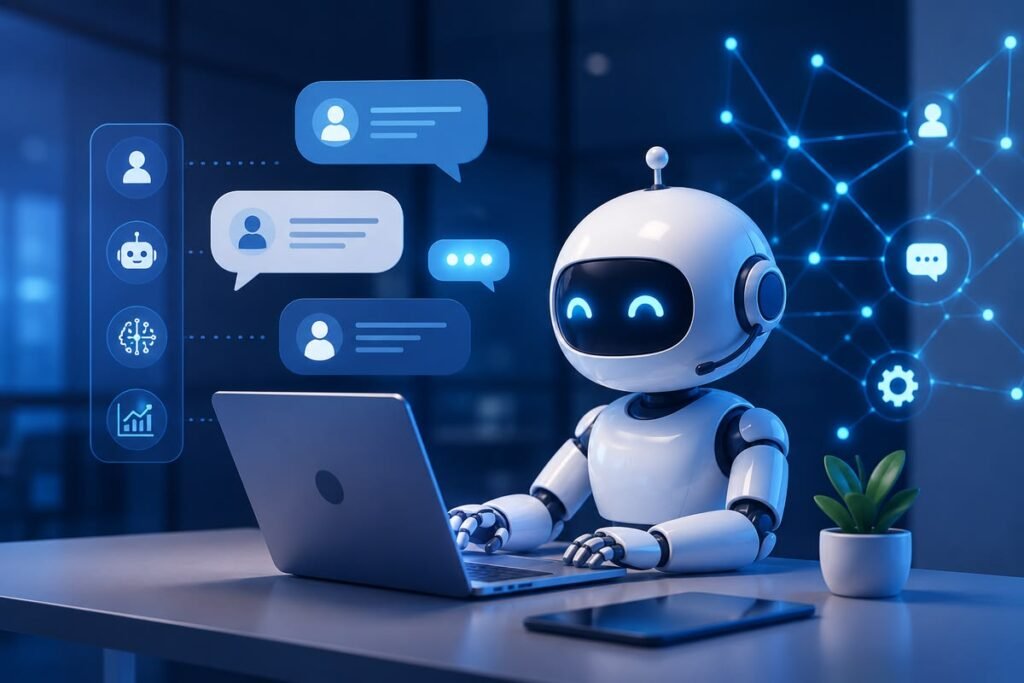
AI chatbots are software programs that use artificial intelligence to converse with users via voice or text. They are made to comprehend inquiries, decipher requests, and offer pertinent answers. Modern AI chatbots can process natural language and manage a greater variety of conversations than classic chatbots, which primarily adhere to set rules.
Thank you for reading this post, don't forget to subscribe!AI chatbots are used by people for a variety of daily tasks. For instance, a client can ask a chatbot about a product, a student can ask for clarification on a challenging subject, and a business owner can utilize one to respond to frequently asked customer queries.
AI chatbots are starting to play a significant role in a number of areas, including marketing, online retail, healthcare administration, education, and customer support. They can assist businesses in managing recurring inquiries, responding faster, and offering assistance on digital channels.
How Do AI Chatbots Work?
AI chatbots use a number of technologies to carry out these tasks:
- Natural Language Processing (NLP): Aids in the processing and interpretation of human language by computers.
- Machine learning: Enables systems to find patterns in data and enhance certain activities.
- Large Language Models (LLMs): By anticipating and organizing linguistic patterns, LLMs produce literature that is human-like.
- Natural Language Understanding (NLU): Assists in determining the purpose and crucial information contained in a user’s message.
- Natural linguistic Generation (NLG): Generates comprehensible linguistic answers.
- Knowledge bases: Offer data that a chatbot can utilize to respond to inquiries.
- Application Integration: Links chatbots to databases, websites, customer support systems, and other software.
7 Powerful Features of AI Chatbots
- Natural Language Understanding
AI chatbots can comprehend inquiries written in common English thanks to natural language comprehension. When interacting with a chatbot, users don’t always have to follow instructions or utilize technical terms.
“How can I improve my English speaking skills?” is one example of a question. The chatbot is able to comprehend the request and recommend useful learning exercises.
- 24/7 Customer Support
The capacity of AI chatbots to offer assistance at various times of the day is one of their most useful characteristics. Automated chatbots may answer frequently asked inquiries whenever their service is accessible, in contrast to traditional customer-service staff who follow set schedules.
For instance, a chatbot can be used by an online retailer to respond to inquiries on shipping, payment options, product availability, and return guidelines.

- Instant Responses
AI chatbots can quickly respond to a wide range of inquiries. Users can ask questions and get answers in a conversational fashion rather than having to wait for an email response or browse through multiple online pages.
Before buying a smartphone, for instance, a buyer can inquire about its features. A chatbot can assist a consumer in comparing options by summarizing the product information that is currently available.
- Personalized Conversations
By taking into account the information users share throughout a discussion, contemporary AI chatbots are able to provide tailored responses. Additionally, certain systems can make recommendations more pertinent by utilizing recorded preferences or authorized account information.
An educational chatbot might, for instance, provide exercises in English that are appropriate for beginners to someone who want to get better at the language.
- Multilingual Communication
Numerous AI chatbots are multilingual. Even if consumers are better at ease speaking a language other than English, this capability enables them to communicate with companies and digital services.
For instance, a chatbot might be used by an online service to respond to simple queries in English, Urdu, Arabic, Spanish, or other languages that are supported.
- Task Automation
Depending on their integrations, chatbots may help users:
- Schedule appointments.
- Collect customer information.
- Answer frequently asked questions.
- Track orders.
- Generate summaries.
- Organize basic requests.
- Connect users with the appropriate department.
- Continuous Improvement
New training data, enhanced instructions, user feedback, and software enhancements can all be used to upgrade and improve AI chatbot systems.
For instance, a business might examine frequently asked questions by clients and modify its chatbot to give more precise responses. Additionally, developers can add new features and enhance language processing.
But not all chatbots immediately pick up knowledge from every exchange. Certain systems require administrators or developers to manually assess performance and make adjustments.
Benefits of AI Chatbots
Saves Time
AI chatbots can respond to common queries without having users to wait for a human response or search through numerous pages. Everyday communication may become quicker as a result.
For instance, rather than writing an email and waiting for a response, a consumer might inquire about a business’s hours of operation.
Reduces Customer-Service Workload
Businesses often receive repeated questions about products, orders, payments, and services. AI chatbots can handle many common requests, allowing customer-service employees to focus on more complicated problems.
Improves Customer Experience
Supports Business Growth
Chatbots can be used by businesses to respond to queries, offer product details, gather questions, and assist prospective clients. These features can help with customer involvement and marketing.

Provides Learning Assistance
Educational chatbots can help students comprehend challenging subjects, practice languages, provide study questions, and review material. Because of this, AI chatbots are helpful additional learning resources
Offers Convenient Communication
People can interact with AI chatbots through websites, mobile applications, messaging platforms, and other supported digital channels. This flexibility makes information easier to access.
Helps Manage Repetitive Tasks
Chatbots can automate selected activities such as collecting information, answering common questions, and organizing customer requests. This may improve efficiency and reduce repetitive manual work.
Common Uses of AI Chatbots
| Industry | Common chatbot uses |
|---|---|
| E-commerce | Product questions, order tracking, and returns |
| Education | Study assistance, quizzes, and explanations |
| Healthcare | Appointment information and general guidance |
| Banking | Account FAQs and service information |
| Travel | Booking assistance and travel questions |
| Marketing | Product information and customer engagement |
| Customer service | FAQs, complaints, and support requests |
| Human resources | Employee FAQs and recruitment assistance |
AI Chatbots in E-Commerce
AI chatbots are used by online retailers to assist consumers with finding products, comprehending product details, and getting order updates.
A consumer looking for a laptop, for instance, can query a chatbot about features like RAM, storage, and screen size. The chatbot can offer pertinent information if it is linked to a reliable product database.
AI Chatbots in Healthcare
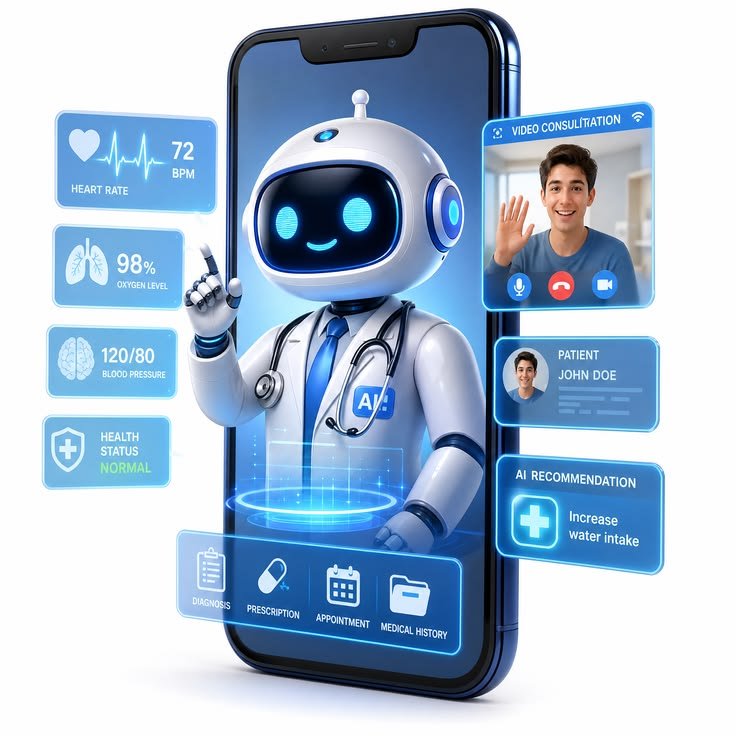
Chatbots can be used by healthcare organizations to help with appointment requests, explain administrative procedures, and offer general information.
A clinic chatbot, for instance, can assist a patient in locating the proper contact details or clarify visiting hours.
AI Chatbots in Banking
Chatbots can be used by banks and other financial organizations to respond to frequently asked queries concerning services, account procedures, and payment methods.
A banking chatbot might, for instance, provide details about various account kinds or explain how to change an online banking password.
AI Chatbots in Travel
Chatbots can be used by travel agencies to assist clients with location exploration, booking processes, and service details.
A travel chatbot might help someone make a reservation, give general destination information, or clarify baggage regulations.
Whether the chatbot has access to reliable and up-to-date travel information determines how helpful these functionalities are.
AI Chatbots in Education
AI chatbots are becoming useful tools in modern education. They can support students, teachers, and educational institutions by providing information and assisting with learning activities.
Helping Students Understand Difficult Topics
Students can ask chatbots to use easier language to convey difficult concepts. For instance, a computer science student may ask for a simple explanation of database administration or artificial intelligence.
Additionally, a chatbot can divide a big subject into manageable chunks and offer examples.
Supporting Language Learning
Students can practice vocabulary, grammar, sentence construction, and communication with the aid of language-learning chatbots.
An English student could, for instance, practice introducing oneself or ask a chatbot to fix a sentence. Outside of the classroom, this can offer more practice.
Creating Study Questions
Chatbots can be used by students to create practice questions, tests, and review tasks depending on a subject. Before an exam, these exercises might assist students in assessing their comprehension.
Assisting Teachers
AI chatbots can be used by educators to plan lessons, arrange activities for the classroom, make question banks, and clarify challenging ideas.
To ensure that generated educational materials are correct and suitable for their students, teachers should review them.

Encouraging Independent Learning
Students can ask inquiries and study subjects at their own pace with the help of AI chatbots. This can stimulate students’ curiosity and assist them in identifying topics that require more research.
Instead of taking the place of instructors, textbooks, class discussions, or independent thought, AI chatbots should enhance education. Additionally, students should abide by the guidelines set forth by their schools on AI-assisted assignments.
AI Chatbots in Business
AI chatbots can help businesses communicate with customers, organize routine activities, and provide information about products and services.
Lead Generation
Chatbots can be used by businesses to gather basic data from prospective clients. For instance, a chatbot on a website might ask users what services they are interested in and if they would want to talk to a salesperson.
Businesses can use this to arrange client inquiries and spot possible opportunities.
Customer Support
Chatbots that assist customers can respond to commonly asked queries like account procedures, delivery policies, business hours, and payments.
The chatbot should offer a mechanism to get in touch with a human agent when a request gets problematic.
Marketing Assistance
By providing product information, outlining specials, and directing clients to pertinent services, AI chatbots can assist marketing initiatives. These exchanges can be used by businesses to improve the ease of internet communication.
Internal Business Communication
Chatbots can be used by organizations to assist staff in locating internal information, comprehending business policies, and gaining access to commonly sought resources. An employee might ask an internal chatbot, for instance, how to find a business policy or submit a leave request.
Improving Productivity
Chatbots can free up employees’ time for activities requiring judgment, creativity, and interpersonal communication by automating specific repetitive jobs. Combining automation with human supervision yields the best outcomes.
Popular Types of AI Chatbots
- Rule-Based Chatbots
Rule-based chatbots follow predefined instructions and decision paths. They respond to specific keywords or selections rather than understanding every possible question.
For example, a website chatbot may display options such as “Shipping,” “Returns,” and “Contact Us.”
These chatbots are useful for simple and predictable customer-service tasks.
- AI-Powered Chatbots
AI-powered chatbots use technologies such as machine learning and natural language processing to interpret user messages.
They can handle more flexible conversations than basic rule-based systems. Their performance depends on the quality of their models, information, and configuration.
- Generative AI Chatbots
Generative AI chatbots create new responses based on user instructions and the information available to them.
They can assist with writing, brainstorming, explanations, summarization, and other language-based tasks.
However, generated answers may contain errors, so users should verify important details.
- Voice-Based Chatbots
Voice-based chatbots allow users to communicate through spoken language instead of typing.
Digital assistants such as Amazon Alexa and other voice-enabled systems demonstrate how people can use spoken commands to access information and control compatible services.
- Customer-Service Chatbots
Customer-service chatbots are designed to answer common customer questions and guide users through support processes.
They may be used on websites, messaging platforms, and mobile applications.
- Social Media Chatbots
Social media chatbots communicate with users through supported messaging services. Businesses may use them to answer questions, share product information, and direct customers to relevant resources.
- Educational Chatbots
Educational chatbots support learning through explanations, quizzes, practice questions, and study assistance.
They can be useful for students who want additional learning support outside regular classroom hours.
Challenges and Limitations of AI Chatbots
Although AI chatbots offer many advantages, they also have limitations that users and businesses should understand.
Incorrect Information
AI chatbots can sometimes generate inaccurate or misleading responses. This is particularly important when discussing medical, legal, financial, or technical subjects.
Users should verify important information through reliable sources.
Privacy and Data Security
Some chatbots process user messages and may handle personal or business information. Organizations must protect this information through appropriate security practices and privacy policies.
Users should avoid entering sensitive details into services they do not trust.
Limited Human Understanding
AI chatbots can interpret language patterns, but they do not experience human emotions or situations in the same way people do.
They may misunderstand sarcasm, cultural expressions, or emotionally complicated requests.
Technical Problems
Internet interruptions, software errors, outdated information, and integration problems can affect chatbot performance.
Businesses need to monitor their systems and provide alternative support options.
Development Costs
Building a customized AI chatbot can require software developers, technical resources, training data, maintenance, and ongoing support.
The cost depends on the complexity of the chatbot and the systems it needs to connect with.
Lack of Human Interaction
Some customers prefer speaking with a real person, especially when handling complaints or sensitive matters. Businesses should provide clear access to human assistance when necessary.
Tips for Using AI Chatbots Effectively
Here are some practical tips:
- Ask clear questions: Explain exactly what information or assistance you need.
- Provide useful context: Include relevant details so the chatbot can understand your request.
- Use specific instructions: Mention the desired format, length, or level of explanation.
- Ask follow-up questions: Request clarification if the first answer is incomplete.
- Verify important information: Check facts using trustworthy sources.
- Protect personal information: Avoid sharing passwords, financial details, and confidential data.
- Choose the right chatbot: Select a tool designed for your particular task.
- Review generated content: Edit and check responses before using them professionally or academically.
For example, instead of asking, “Tell me about computers,” you can ask, “Explain five main types of computers in simple English with one example of each.”
Future Trends in AI Chatbot Technology.
- More Natural Conversations
Future AI chatbots are expected to improve their ability to understand conversational language, follow-up questions, and longer discussions.
This may make interactions more natural and reduce the need for users to repeat information.
- Personalized AI Assistance
Chatbots may provide more personalized experiences by using permitted preferences and relevant context.
For example, an educational chatbot could suggest practice activities based on a student’s learning goals.
Strong privacy protections and user control will be important as personalization develops.

3. Voice and Multimodal Interaction
Future chatbots may combine text, voice, images, and other forms of information in a single conversation.
This could help users explain problems by sharing a picture, speaking a question, or providing a document.
- Better Business Automation
AI chatbots may become more capable of assisting with multi-step business tasks, such as organizing customer requests, preparing summaries, and connecting different software services.
- Improved Multilingual Support
Advances in language models may make it easier for chatbots to communicate across different languages and regional variations.
This could improve access to digital services for people who do not use English as their primary language.
- More Specialized Chatbots
Instead of using one general chatbot for every task, organizations may develop specialized assistants for education, finance, customer service, research, and other fields.
Specialized systems can be designed around particular information sources and workflows.
- Stronger Privacy and Security
As AI chatbots become more widely used, organizations will need stronger approaches to protecting user information.
Future developments may include improved access controls, clearer data policies, and better tools for managing information.
Frequently Asked Questions About AI Chatbots
- What are AI chatbots?
AI chatbots are software applications that use artificial intelligence to communicate with users through text or voice. They can answer questions, provide information, assist with tasks, and support digital services.
- How do AI chatbots work?
AI chatbots process user messages using technologies such as natural language processing, machine learning, and language models. They interpret the request and generate a response based on their design and available information.
- What are the main benefits of AI chatbots?
The main benefits include faster responses, 24/7 availability for supported services, task automation, improved customer communication, multilingual support, and assistance with learning.
- What are some popular AI chatbots?
Examples include ChatGPT, Google Gemini, Microsoft Copilot, and various customer-service chatbots developed for websites and businesses.
- Are AI chatbots free?
Some AI chatbots provide free access to basic features, while others offer paid plans, subscriptions, or usage-based pricing. Costs depend on the provider and the features users need.
Conclusion
AI chatbots are changing how people communicate with technology. They help users find information, complete routine tasks, receive customer support, and explore educational topics through convenient conversations. Their seven powerful features include natural language understanding, 24/7 support, instant responses, personalized conversations, multilingual communication, task automation, and continuous improvement.